
Last updated November 23, 2026
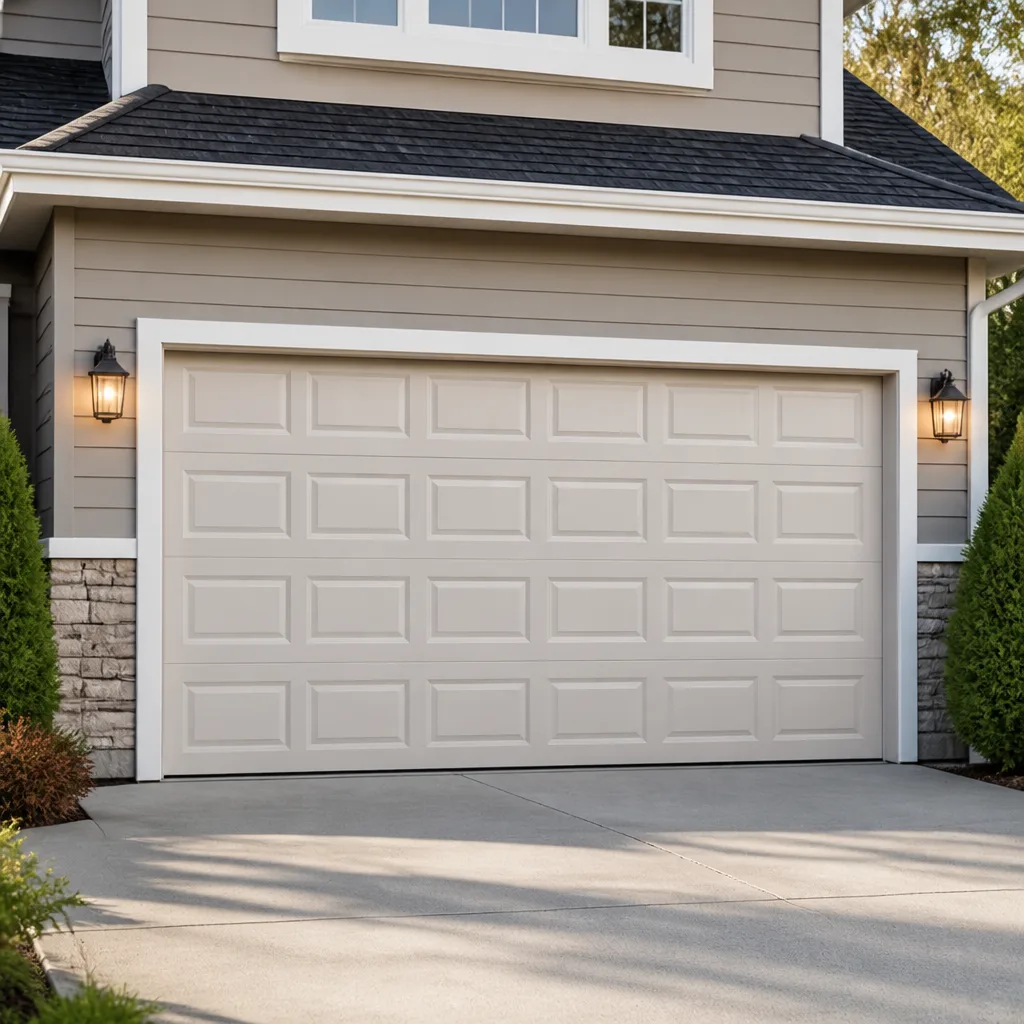 Raised-panel steel
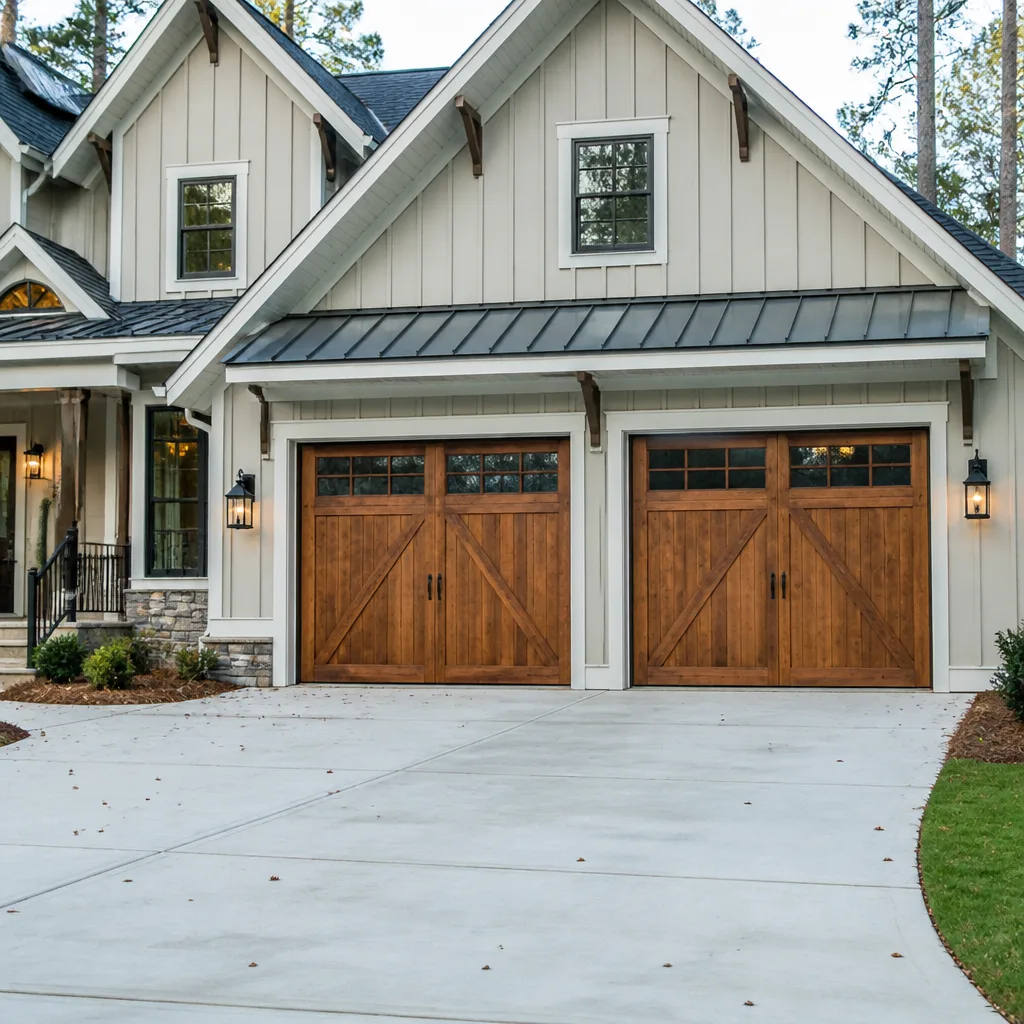 Carriage house
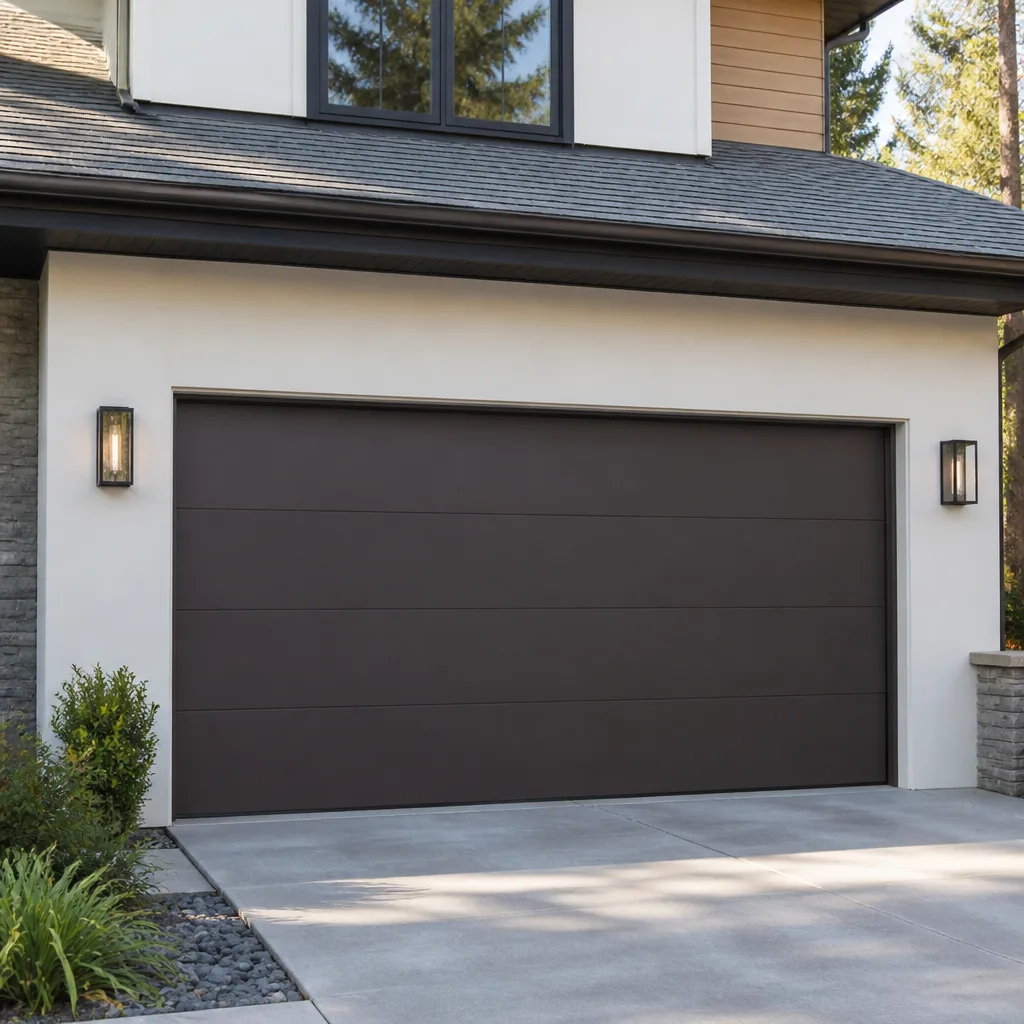 Modern flush
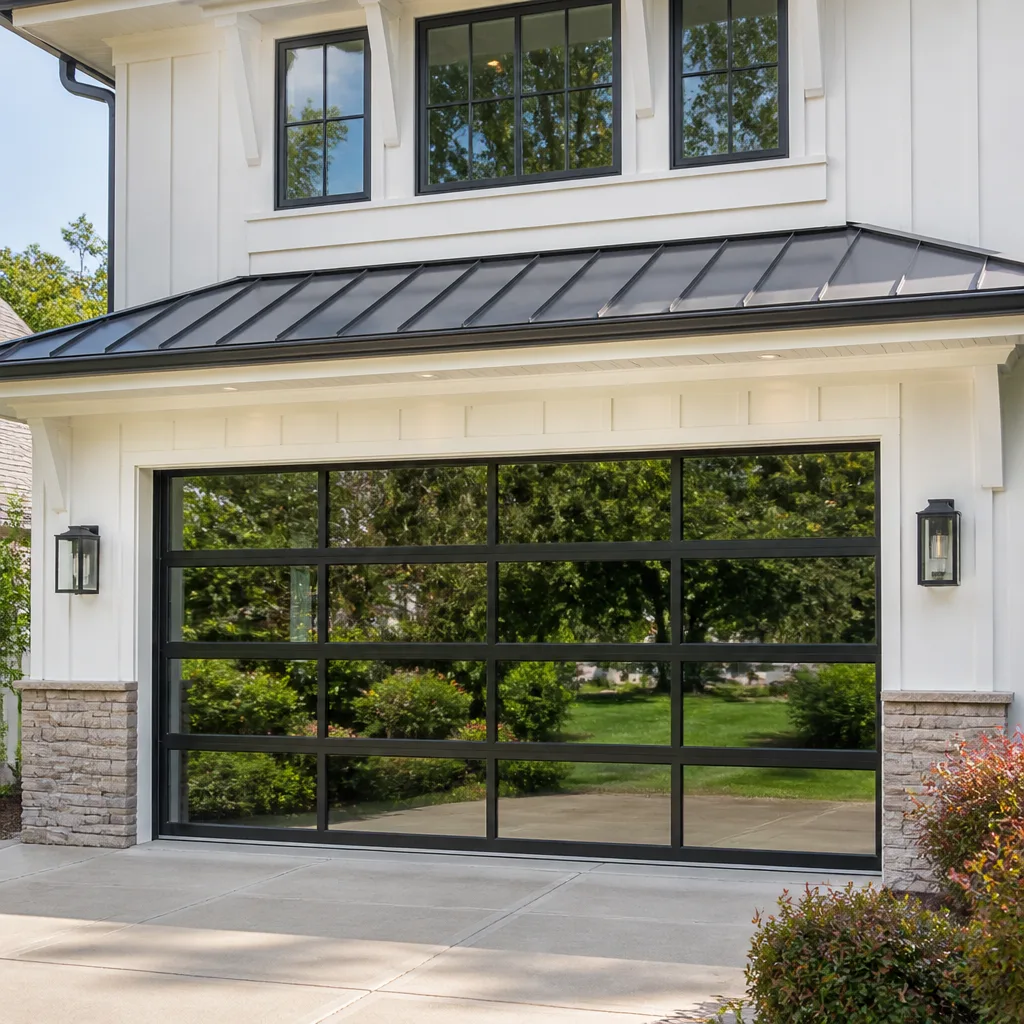 Full-view glass
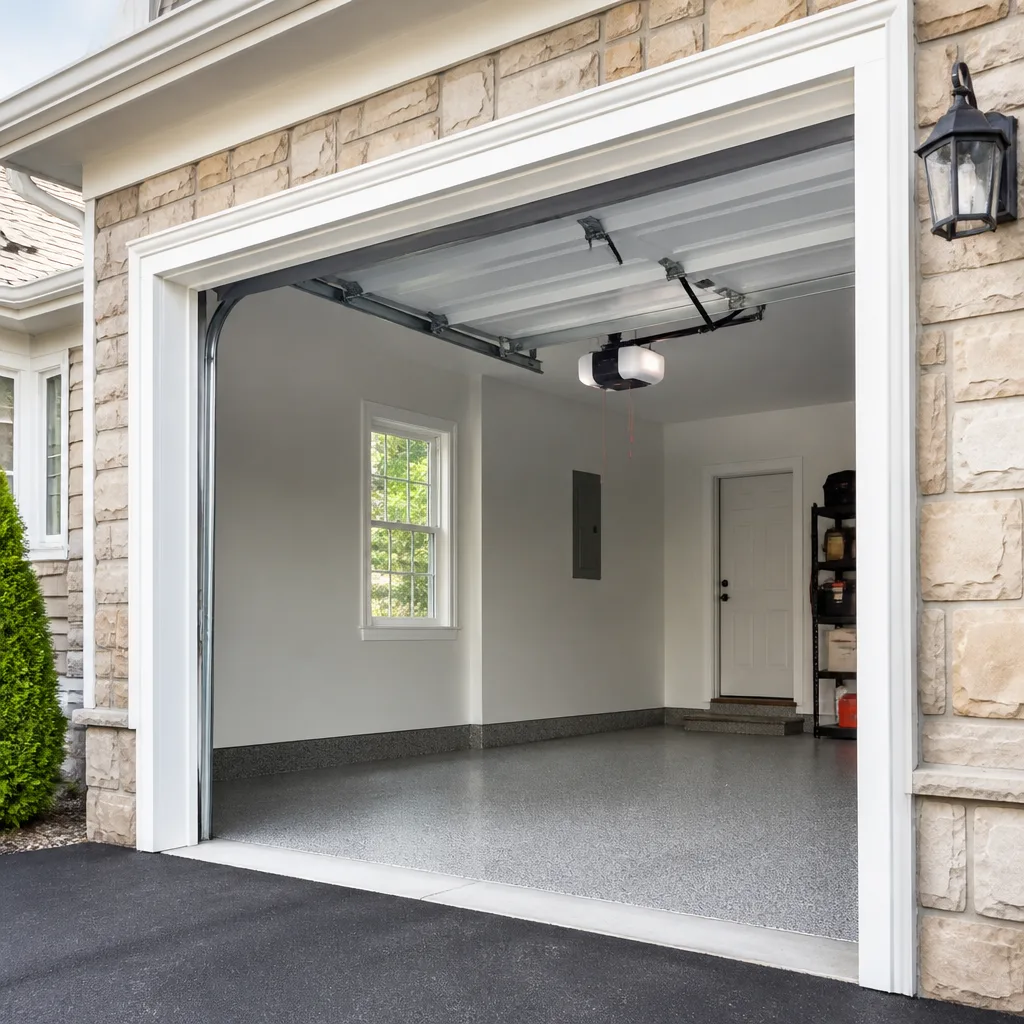 LiftMaster openers
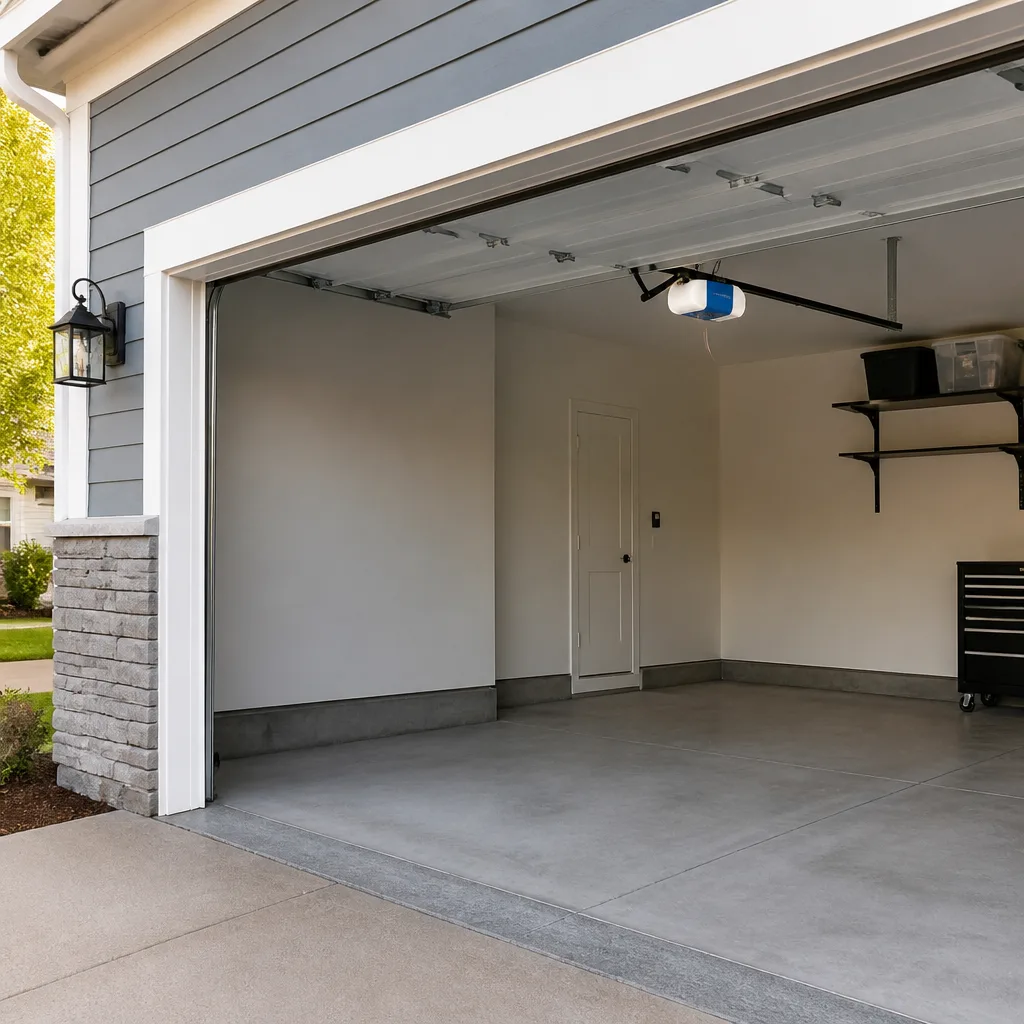 Chamberlain openers
Full 25-point door and opener safety check with every visit - springs, cables, rollers, tracks, and your LiftMaster or Chamberlain opener included
You get a price before we start. It does not change when the pro arrives.
Get your free estimateThe Complete Guide to Garage Doors in Newton
Most Newton homes were built before the modern sectional door existed, which means the sizing charts in a typical buying guide don’t match roughly half the driveways in this city. A 1920s colonial off Commonwealth Avenue and a 2015 build in West Newton can both have garages, but they share almost nothing else: different header clearances, different opening widths, different ceiling heights, different expectations about what a door should look and sound like. If you’ve been told your garage is “standard,” that’s usually where the trouble starts. This guide walks through sizing, materials, insulation, openers, and neighborhood rules as they actually apply in Newton, and flags the places where a professional measurement saves you from an expensive mistake.
Quick Answer
A garage door in Newton needs to be measured to your specific opening, not ordered off a standard chart. Victorian and colonial garages often have low headroom and non-standard widths that require a custom or low-headroom door, mid-century ranches usually suit a standard sectional, and new construction in Newton typically accommodates higher insulation values and smart openers. Insulation matters here more than in a mild climate because the freeze-thaw cycle is hard on doors and because most Newton garages are attached, so a well-sealed insulated door protects the rooms above and behind it.
Styles & brands we work with
- Raised-panel steel
- Carriage house
- Modern flush
- Full-view glass
- LiftMaster openers
- Chamberlain openers
Table of Contents
- Why Newton’s Housing Stock Changes Every Door Decision
- Sizing and Header Clearance: What “Standard” Really Means
- Insulation in a Freeze-Thaw Climate: Why R-Value Is Structural
- Village-by-Village Rules: Chestnut Hill, Newton Centre, and West Newton
- Matching Opener Horsepower and Drive Type to Your Garage
- What a Real Site Measurement Catches That a Big-Box Quote Doesn’t
- How a Typical Job Goes From First Call to Finished Door
- Does Brand Matter? Service, Parts, and Longevity
Why Newton’s Housing Stock Changes Every Door Decision
Newton grew up in layers. The oldest neighborhoods have Victorian and colonial homes with detached or semi-detached carriage-style garages that were added later, often with tighter frames and lower ceilings than anything built today. The mid-century ranches and split-levels that fill stretches of Newton spread out with wider driveways and flatter rooflines, which usually means a conventional sectional fits cleanly. And the new construction and gut renovations, especially around West Newton and Auburndale, follow modern framing standards that make just about any door option available.
What that mix means in practice is that you cannot pick a door by year of build and expect it to fit. Three doors on the same street in Newton could have three different answers to the same questions:
- Headroom above the opening. Old carriage-style garages sometimes have almost none, which rules out a standard torsion setup and pushes you toward a low-clearance door and opener combination.
- Opening width and height. A door sized for a modern two-car garage won’t fit a 1920s single. Custom widths exist, but they cost more and take longer to arrive.
- Backroom depth. The door has to travel along the ceiling on its way up. A short garage needs either a low-headroom door or a vertical-lift track.
- Structural condition of the header. An older garage may have a sagging header or a rotting frame that needs repair before any door hangs straight.
This is why we start every job the same way: we measure, we look at the framing, we check the ceiling, and only then do we talk about door styles. A homeowner who has already picked a door from a catalog isn’t stuck, but knowing whether it will fit before you order it saves a lot of back and forth.
Sizing and Header Clearance: What “Standard” Really Means
The word “standard” in the garage door trade means “the most common size sold,” not “the size your garage is.” Most modern single-car openings measure about 8 or 9 feet wide by 7 feet tall, and two-car openings run to 16 feet wide, but Newton’s older homes regularly break that pattern. A door that’s an inch too narrow leaves a gap you can see daylight through, and one that’s too wide simply doesn’t ship. The only reliable number is the one measured at your opening.
Header clearance is the other half of the sizing puzzle. When a technician measures, they’re looking at four things:
- Opening width and height at the finished frame, not just the rough opening.
- Headroom from the top of the opening to the ceiling. Standard torsion springs need roughly 12 inches; low-headroom setups can work in less, but the door has to be built for it.
- Backroom from the opening to the back wall, so the door has space to travel.
- Sideroom on each side of the opening, since the track and springs mount there.
If any of those come up short, you’ll hear about it from a technician who measures rather than a sales rep working off a form. On older Newton garages we frequently find uneven floors and out-of-square frames that push the door off its seals. That’s a repair and adjustment question before it’s ever a replacement question.
Insulation in a Freeze-Thaw Climate: Why R-Value Is Structural
Insulation on a garage door is usually sold as a comfort feature, but in Newton it does structural work. A non-insulated steel door in a hard freeze-thaw cycle sweats. Warm, humid air hits the cold interior face, condenses, and works its way into the door’s joints and hardware. Over a few winters that shows up as rust, delamination, and sticking sections. An insulated door keeps the interior face closer to room temperature, which reduces condensation and keeps the door’s mechanism moving smoothly through the season.
There’s a second reason insulation matters here. Most Newton homes have attached garages with living space directly above or beside them. Whatever isn’t insulated in the garage becomes a load on the room next to it. That’s a heat-loss question, not a comfort question. A well-sealed insulated door with a good perimeter seal reduces the draft that runs from the garage into the house.
Rough guidance by door construction:
- Single-layer steel: lightest and least expensive, and mostly fine for a detached, unheated garage used for storage.
- Steel with polystyrene core: a middle step up, sealed faces, better for attached garages in Newton.
- Steel with polyurethane core: heavier and higher insulation value, best where the garage shares a wall or ceiling with living space.
- Wood and composite: popular on older Newton homes where the goal is to match the house’s original character, though wood needs annual attention in a wet, freezing climate.
We won’t quote a specific R-value for a specific door without knowing which model you’re looking at, but the practical rule is simple: the more the garage connects to the house, the more insulation is worth paying for.
Village-by-Village Rules: Chestnut Hill, Newton Centre, and West Newton
Newton is really a collection of villages, and each one treats garage doors differently. Before you order anything, know where you stand with your neighbors and your local rules.
Chestnut Hill
Chestnut Hill has some of the strictest homeowner association expectations in the city. Many associations care about door color, panel style, and whether the profile fits the streetscape. A door that looks great on a website can draw a written objection from an HOA if it clashes with the development’s palette. Ask for the association’s standards before you pick a panel profile, and get approval in writing. If a neighbor has recently replaced their door, that’s a useful sanity check on what the association accepts.
Newton Centre
Newton Centre has more older homes and a stronger historic-preservation sensibility. The right door there is usually one that echoes the original: raised-panel steel in a color that matches the trim, a carriage-house profile on a detached garage, or a well-matched wood composite on a colonial. Anything that looks like a modern showroom door will stand out for the wrong reasons. If your home is in a historic district or subject to local guidelines, check with the city’s building department before ordering, since some changes need approval.
West Newton
West Newton and the newer builds on the city’s edges have much more freedom. Standard 16-foot sectionals fit cleanly, ceiling heights allow for standard torsion systems, and there’s room for a belt-drive opener and a door that runs quietly. If you’re in a newer development, check the HOA rules once, then get on with it.
Everywhere else in Newton
For Auburndale, Waban, Nonantum, and the villages in between, the answer is usually a blend: fit the house first, check the rules second, then let the measurements decide the rest. That order keeps you out of most of the trouble.
Matching Opener Horsepower and Drive Type to Your Garage
The opener has to suit the door, the garage, and the household. A heavy insulated door on a light opener strains the motor and shortens its life; a quiet belt-drive opener on a detached garage is money spent on a feature nobody hears. Here’s how it breaks down in the layouts we see most often in Newton.
Horsepower
- 1/2 HP: adequate for a lightweight single door, common on older detached garages. Not the right choice for a heavier insulated door.
- 3/4 HP: the sensible middle for most single doors and lighter double doors. The most common pick in Newton.
- 1 HP and up: suits heavy double doors, doors with a lot of glass, and carriage-style doors on older homes where the door itself is substantial.
Drive type
- Belt drive: the quietest option, and the one we recommend whenever a bedroom sits above or beside the garage. Most attached-garage homes in Newton benefit.
- Chain drive: durable and less expensive, but noticeably louder. Fine for detached garages where noise doesn’t travel into the house.
- Screw drive: a good fit where the ceiling is low and the homeowner wants quiet without going to a belt.
- Jackshaft (wall-mounted): the right choice when headroom is tight, since it mounts on the wall beside the door instead of hanging from the ceiling.
Smart-opener compatibility matters too. LiftMaster, Chamberlain, Genie, and Craftsman all make openers with app control and safety sensors, and if you already own one of those brands, replacing the opener is usually a straight swap on the wiring. If you’re adding a smart opener, make sure the model you pick matches the door’s weight and has the safety reversing feature required by code.
What a Real Site Measurement Catches That a Big-Box Quote Doesn’t
A big-box store can sell you a door, but the quote you get at the counter is based on the size you told them. That’s not the same as a site measurement, and the difference shows up fast. Here’s what a trained technician catches in person that a form does not:
- Out-of-square frames. Very common in older Newton homes. The door has to be custom-fit or the track has to be adjusted, and neither shows up on a store quote.
- Low headroom. A door that needs a torsion spring assembly may not have the ceiling height for it. Getting this wrong after delivery means shipping the door back.
- Damaged framing or a sagging header. The new door hangs off the existing frame. If the frame is compromised, the door goes in crooked and the repair isn’t in the original quote.
- Electrical for the opener. Not every older garage has a wired opener outlet in the right place. Adding one changes the labor.
- Driveway grade and drainage. A door that sits too close to a sloped or puddled driveway needs a different bottom seal or a lift, or it will take on water through the winter.
- Real door weight. An insulated carriage door on a two-car opening weighs a lot more than a single-panel door. The opener and springs have to match.
The result of skipping the measurement is usually one of two things: a door that doesn’t fit, or a “free” install quote that grows as soon as the installer sees the actual garage. A measured quote takes longer to produce but it’s the number you can rely on.
How a Typical Job Goes From First Call to Finished Door
What a job looks like depends on whether it’s a repair or a full replacement. Repairs are usually the faster path, while a new door means measuring, ordering, and scheduling. Here’s the general sequence on both.
For a repair
- Call and describe the problem. A door that won’t open, a snapping spring, or an opener that runs without lifting the door all point to specific culprits.
- Diagnosis on site. A technician tests the door, the springs, the tracks, and the opener, and confirms the cause rather than guessing.
- Written estimate before work. You approve the price, then the repair happens.
- Test and adjust. The technician cycles the door several times and checks the safety sensors before leaving.
For a replacement
- Site measurement. Width, height, headroom, backroom, and sideroom are all recorded.
- Door selection and written price. Materials, insulation, window options, and opener compatibility get settled here.
- Order and schedule. Custom sizes take longer to arrive than standard sizes. We confirm the date before you commit.
- Removal and installation. Old door comes down, new door and track go up, opener is wired and tested.
- Final walk-through. Balance, travel, safety sensors, and seal check.
For a repair, we can often get to you same day. For a new door, the sensible path is a free measure and a written price first, then the schedule.
Does Brand Matter? Service, Parts, and Longevity
Brand matters, but not in the way most people think. It matters because a technician who’s familiar with your specific system diagnoses it faster and doesn’t waste your time on trial and error. We work on LiftMaster, Chamberlain, Genie, Clopay, Amarr, Wayne Dalton, Craftsman, and Raynor equipment, which covers the vast majority of doors and openers you’d find on a Newton house. When a Clopay residential door starts sticking, the likely cause is usually in the same place. When a Genie opener loses its remote pairing, the fix is usually the same. Familiarity saves the call.
The other reason brand matters is parts. If your door is a common brand, replacement panels and hardware are available. If it’s an oddball, the answer might be a repair instead of a replacement, or a different door entirely. We don’t sell any one brand, which means we can recommend what fits your garage rather than what’s in stock.
What we’d caution against is buying on brand name alone. A well-made door from a lesser-known brand that’s correctly sized and correctly installed will outperform a big-name door that’s been crammed into the wrong opening. The installation matters as much as the box.
See the difference
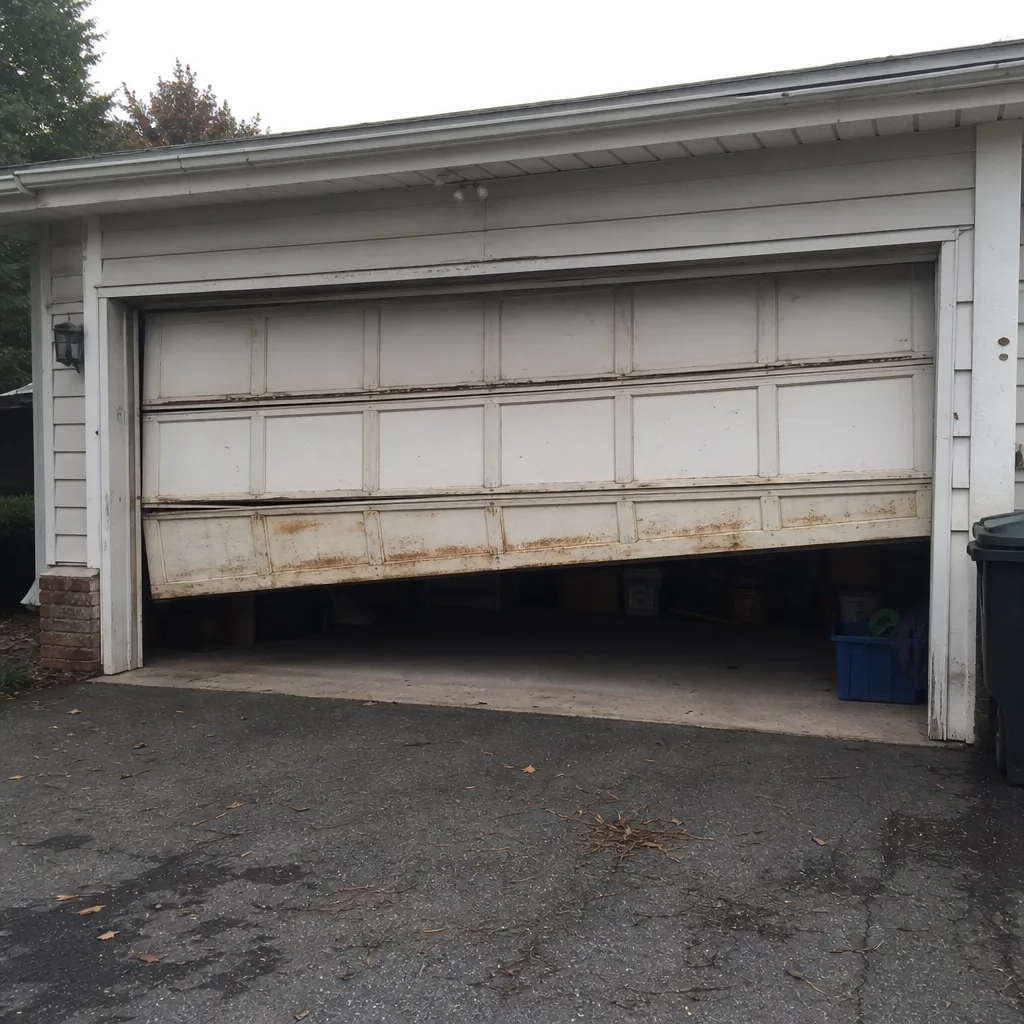 Before
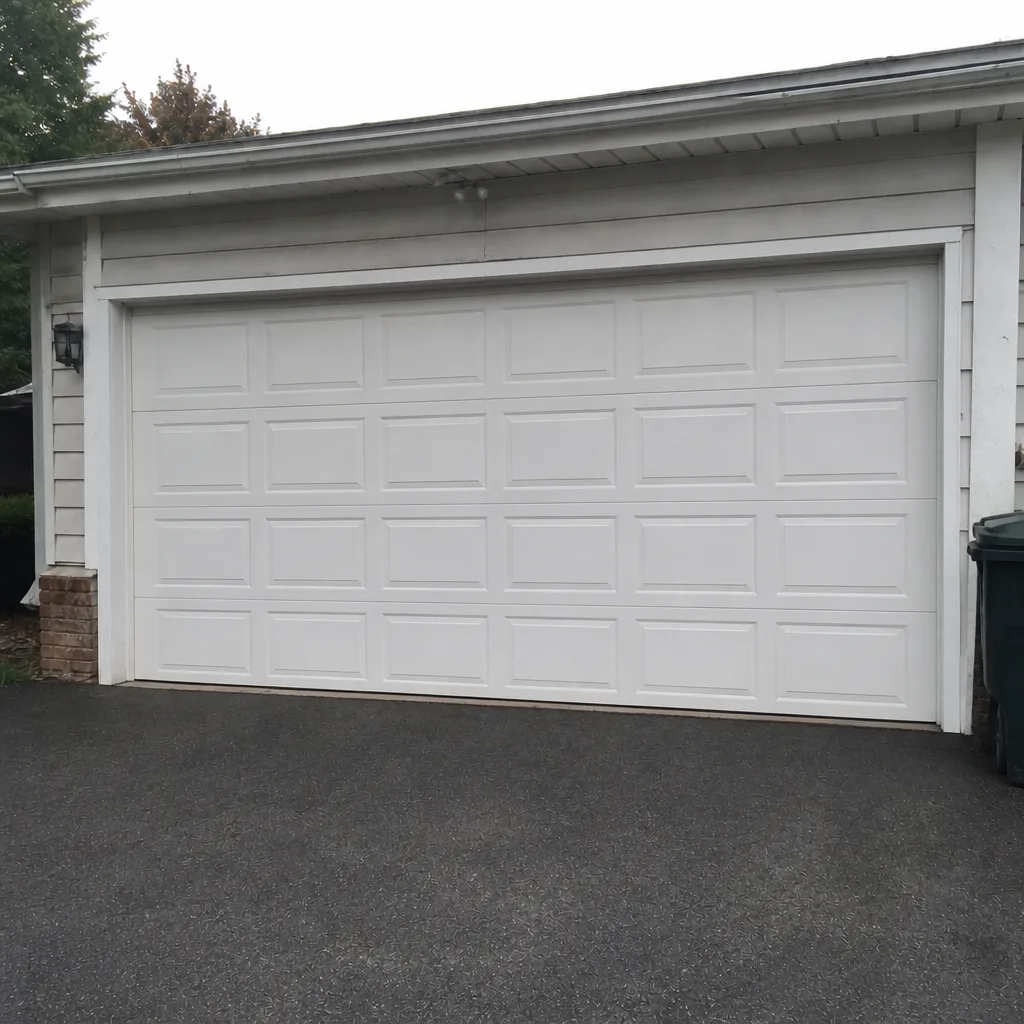 After
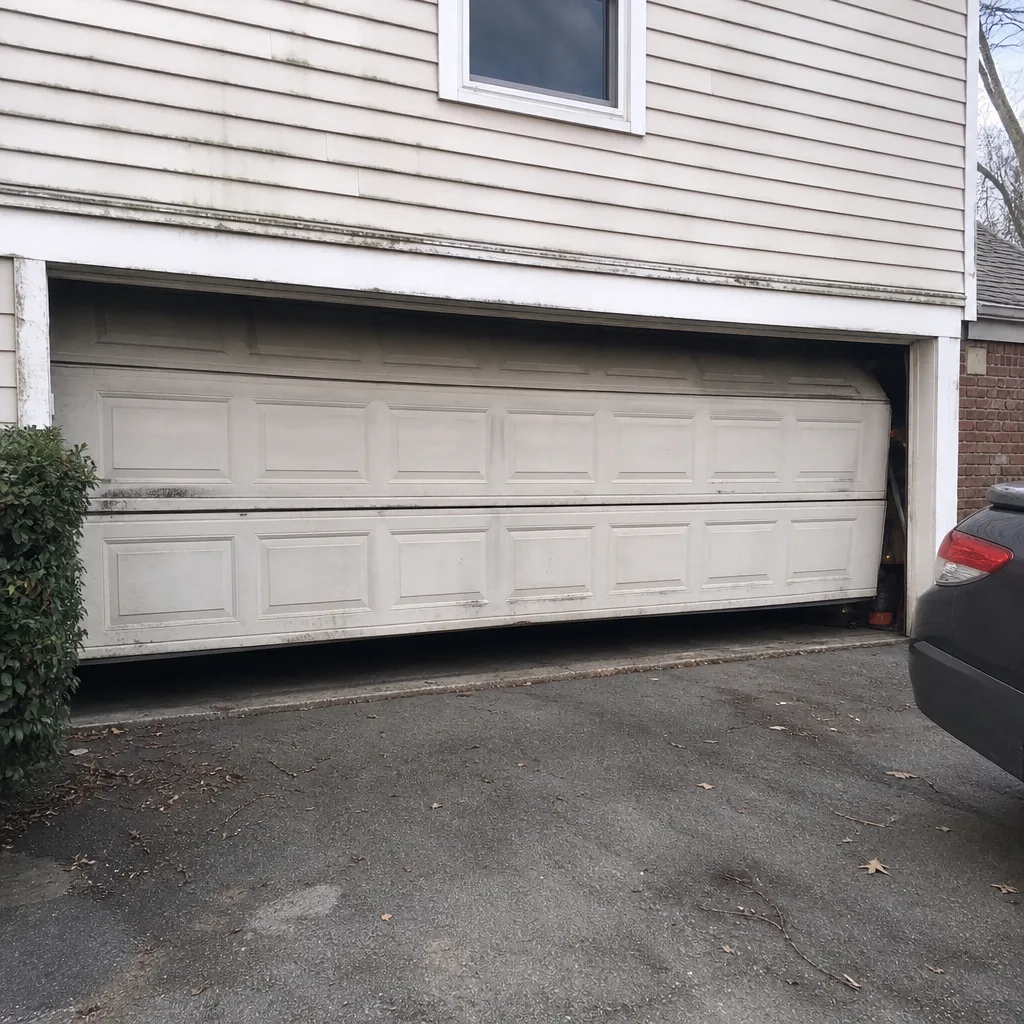 Before
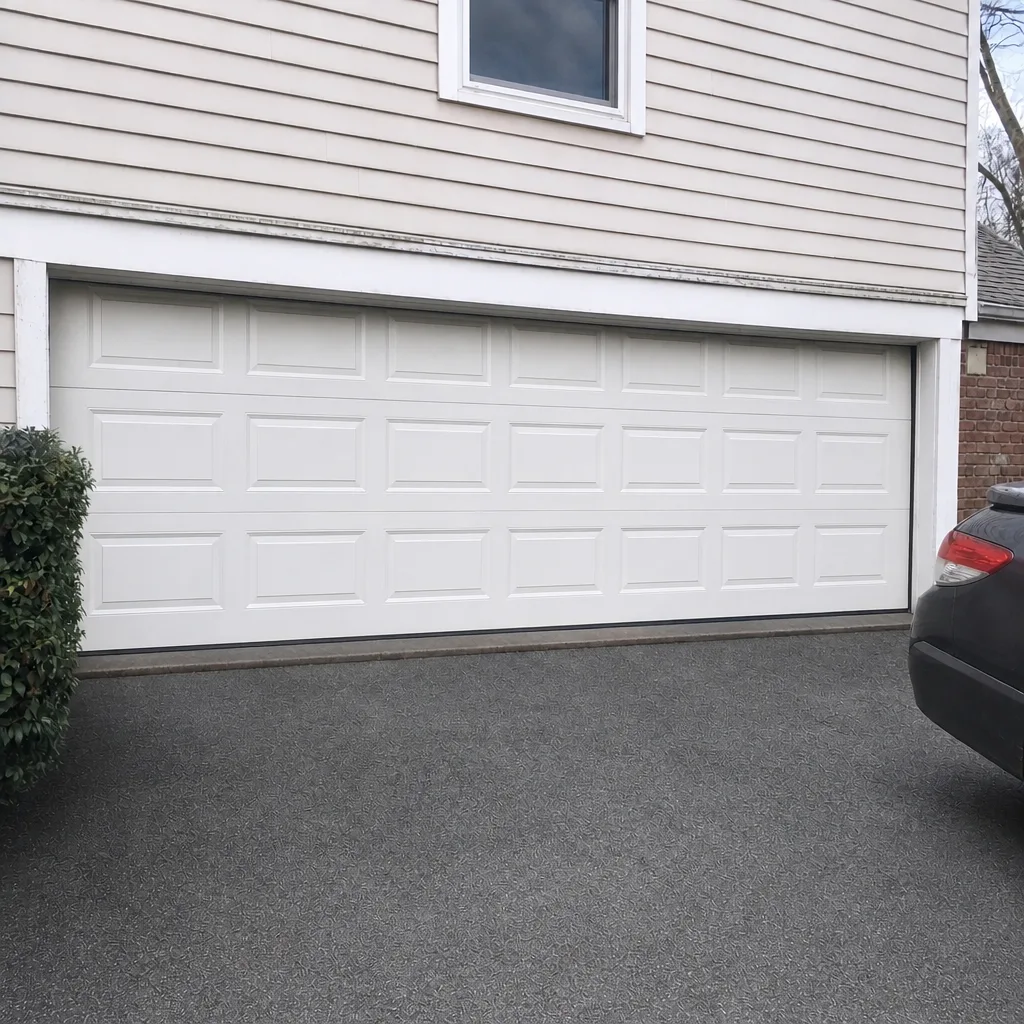 After
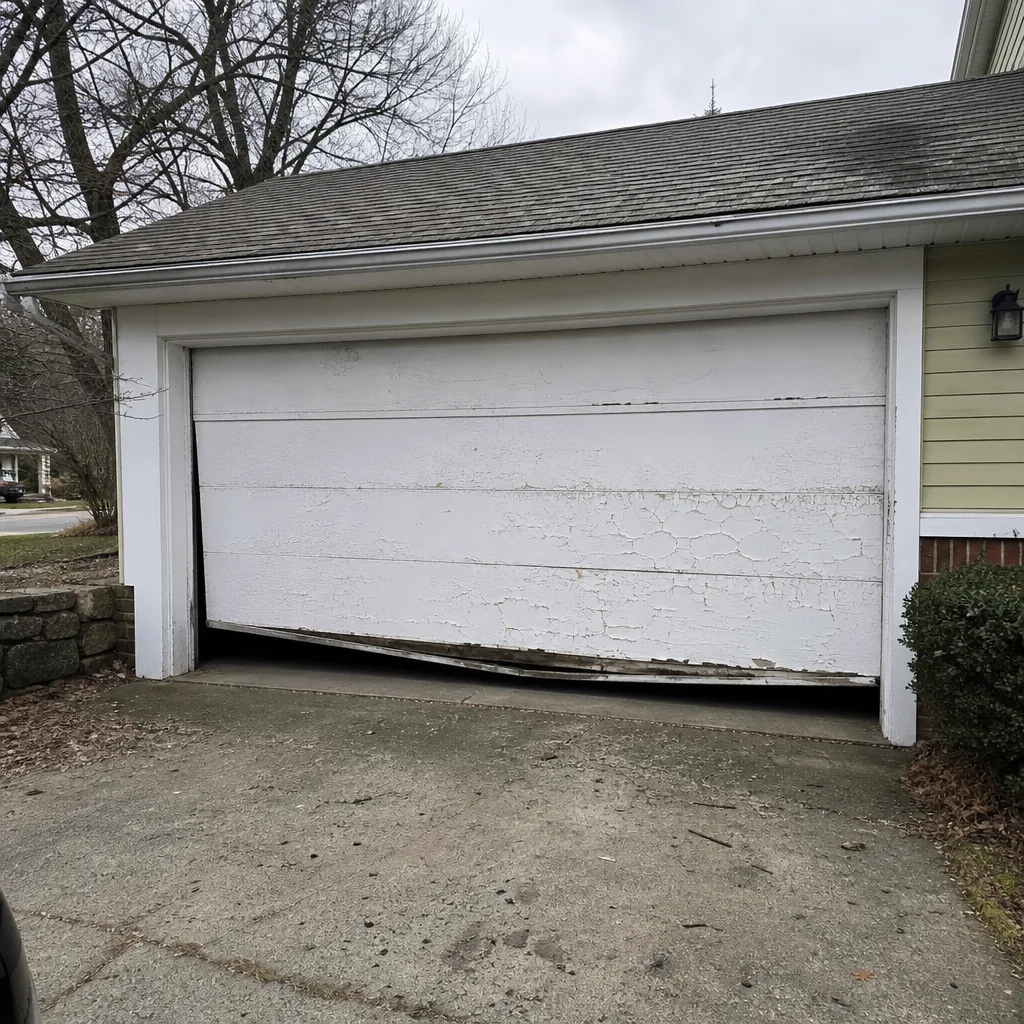 Before
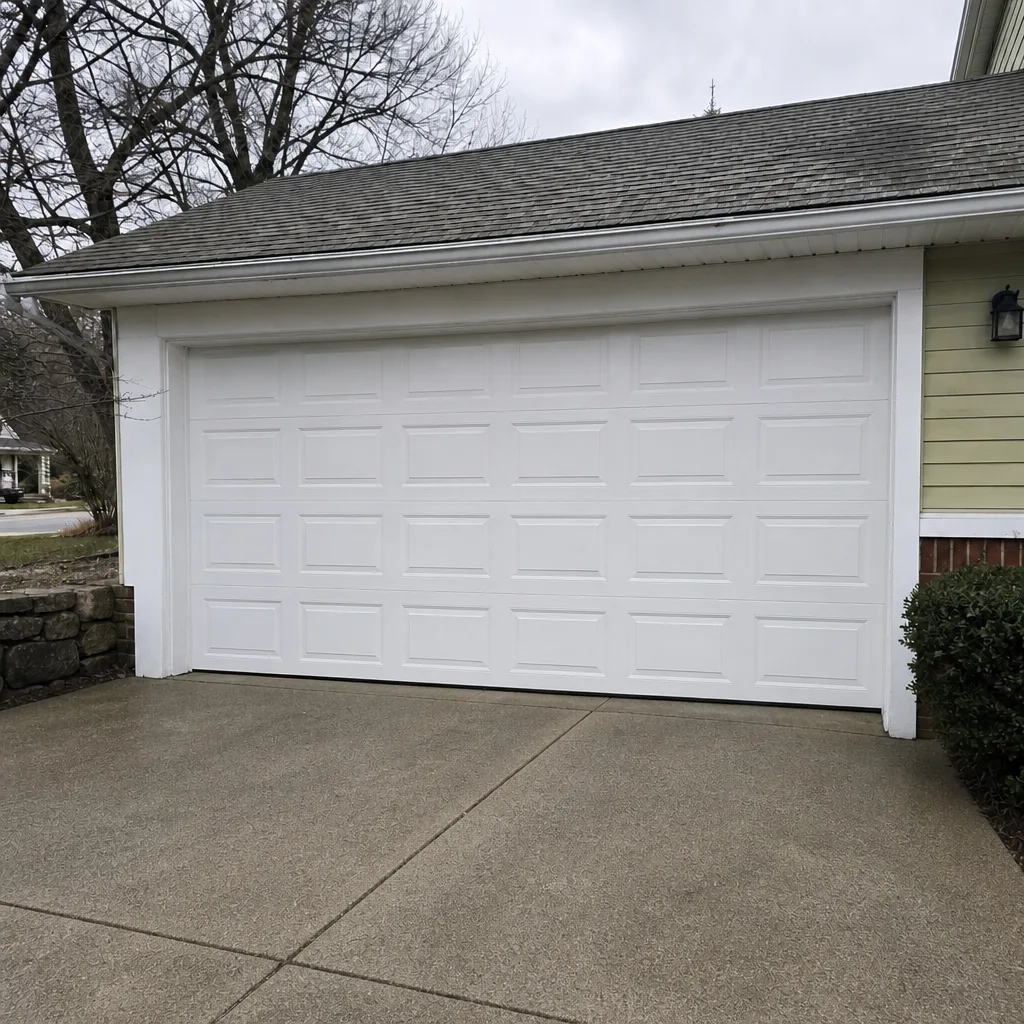 After
Common Mistakes to Avoid
- Ordering a door off a standard size chart. Newton has too many non-standard openings for the chart to be reliable. Measure your actual opening, or have it measured, before you order.
- Picking the door before checking the HOA or historic rules. In Chestnut Hill and Newton Centre especially, a door that fits perfectly can still be rejected if the style or color clashes with local standards. Check first.
- Pairing a heavyweight door with a lightweight opener. A 1/2 HP opener on a heavy insulated door will strain and eventually fail. Match the opener to the door’s real weight.
- Trying a spring replacement yourself. Torsion springs are under extreme tension and can cause serious injury if they release unexpectedly. This is a job for a trained technician.
- Buying an insulated door for the wrong reason. Insulation is worth it on attached garages, but on a detached, unheated storage garage it’s usually money better spent on a quiet opener or better hardware.
- Ignoring drainage and grade. A door that sits flush to a sloped driveway will take on water every winter. Check the grade before you order a bottom seal.
- Going with the lowest quote without seeing what it includes. A quote that excludes disposal, framing repair, or opener wiring is not the same as one that includes them. Compare line by line.
When to Call a Professional
Some jobs are worth doing yourself: cleaning tracks, lubricating rollers, replacing a bottom seal. Others should always go to a trained technician. A broken or snapped torsion spring, a door that comes off its track, a door that slams down instead of lowering smoothly, and anything involving the opener’s electrical wiring all belong in the professional column. Call a pro immediately if you hear a loud snap from the spring area, see a gap or kink in a spring, or if the door becomes dangerously heavy to lift by hand. We also handle opener failures, remote-pairing issues, and full door replacements.
Newton Garage Door Repair Co offers free estimates in Newton. Call (877) 362-5143. We answer 24/7. Fast dispatch from 7am to 7pm, Sunday through Friday. Our technicians have up to 10 years of experience, and we work on the door and opener you already own, not just the brand we’d like to sell.
Frequently Asked Questions
Most Newton homeowners end up choosing between a standard single door or a double-car door, and the price varies widely based on material, insulation, size, and window options. Because older Newton homes often need a custom size, the final estimate depends on the measurement more than the catalog page. We provide a free measure and a written price before you commit, and the written estimate is the price you pay. Call (877) 362-5143 for an exact quote.
Yes, if the door is a current model and the panel is still available. Older doors sometimes have panels that are no longer manufactured, which pushes the job toward a full replacement. We can usually tell after seeing the door’s model and checking availability. Call (877) 362-5143 and we’ll diagnose it first.
It depends on the distance between the top of the opening and the ceiling. Standard torsion setups need roughly 12 inches, while low-clearance doors and jackshaft openers can work in less. If your garage is under that, a wall-mounted opener or a low-headroom door is the right answer. Have it measured before ordering an opener.
Yes, on attached garages. The freeze-thaw cycle here causes condensation on cold steel doors, which leads to rust and stiffness, and insulation reduces that. It also slows heat loss from the rooms above and beside the garage. On a detached, unheated garage the benefit is smaller, and a good bottom seal may be the more useful upgrade.
It depends on where in Newton you live. Chestnut Hill associations often regulate door style and color, and Newton Centre has a stronger historic-preservation culture. Check with your HOA or the city’s building department before you order. Getting written approval first is faster than arguing after the door is hung.
It’s not dangerous, but it needs attention before it turns into a bigger repair. A humming opener with no movement often points to a stripped gear, a broken spring, or a locked door. Call (877) 362-5143. We answer 24/7. Fast dispatch from 7am to 7pm, Sunday through Friday, and we’ll diagnose it on site.
The Bottom Line
Newton’s housing stock makes garage door decisions more specific than a buying guide lets on. The right door for a Newton Centre colonial isn’t the right door for a West Newton new build, and a standard-size chart won’t tell you that. Measure first, check local rules second, then choose the door and opener to match. For a repair, call before the small problem becomes a large one, and for a replacement, get a free measure and a written price you can compare. If you want a second set of eyes on your door, we’re glad to help. Newton Garage Door Repair Co covers the full job, from garage door repair and garage door opener repair to garage door spring repair. Call (877) 362-5143 for a free estimate. We answer 24/7. Fast dispatch from 7am to 7pm, Sunday through Friday.
Written by the team at Newton Garage Door Repair Co.