
Last updated November 23, 2026
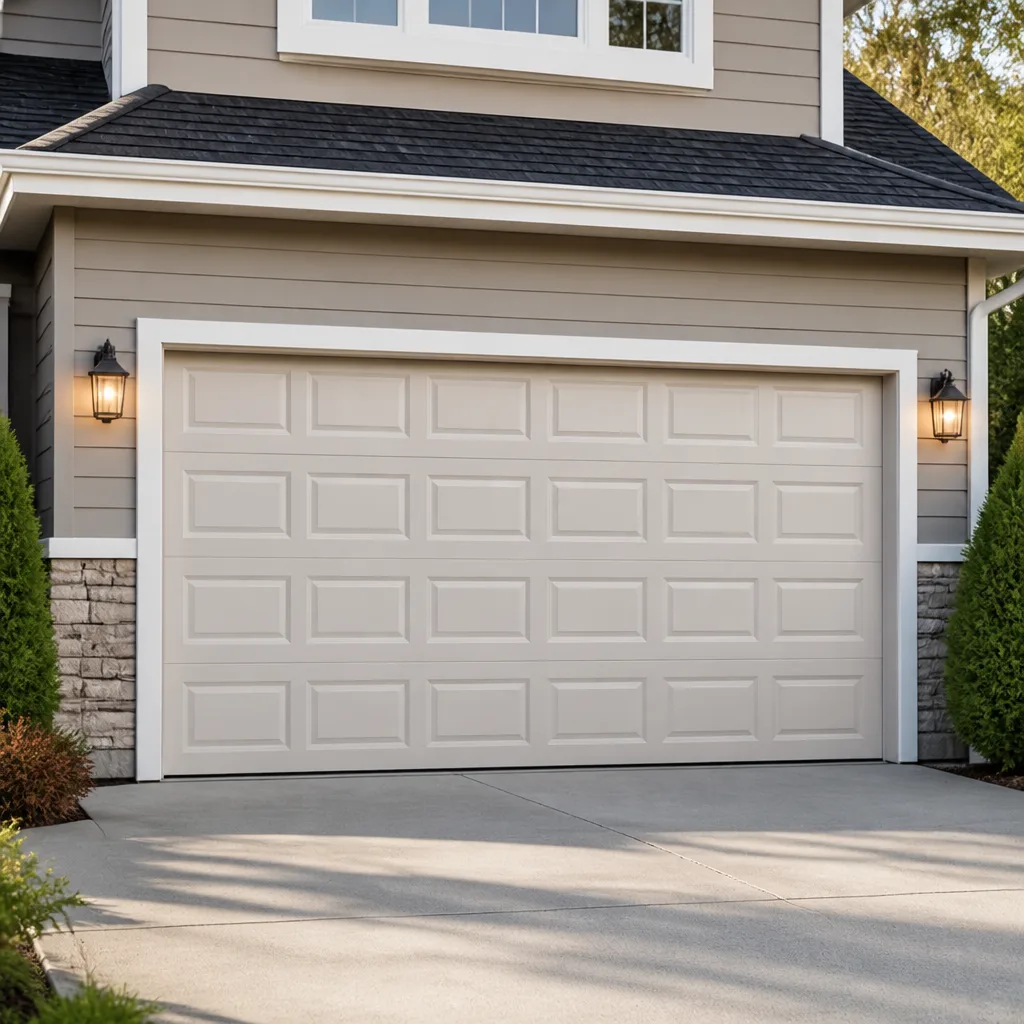 Raised-panel steel
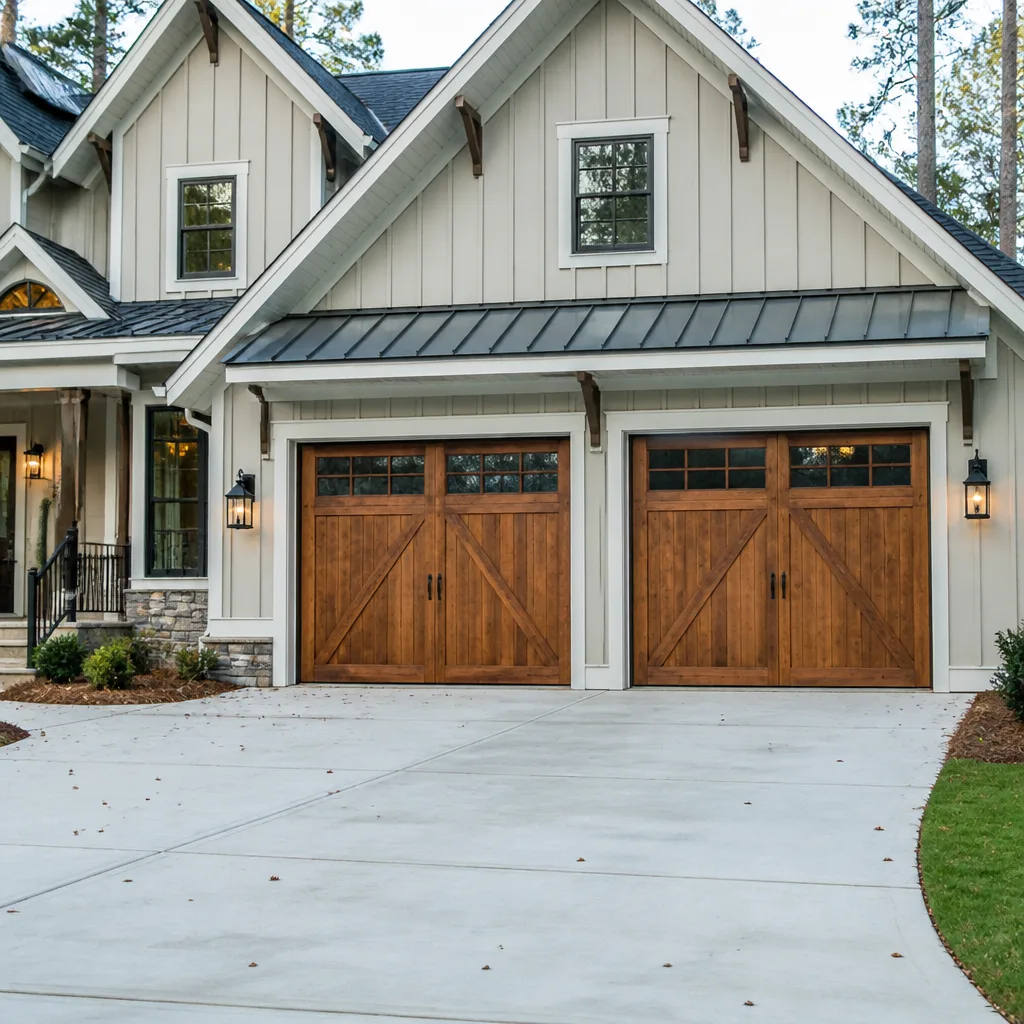 Carriage house
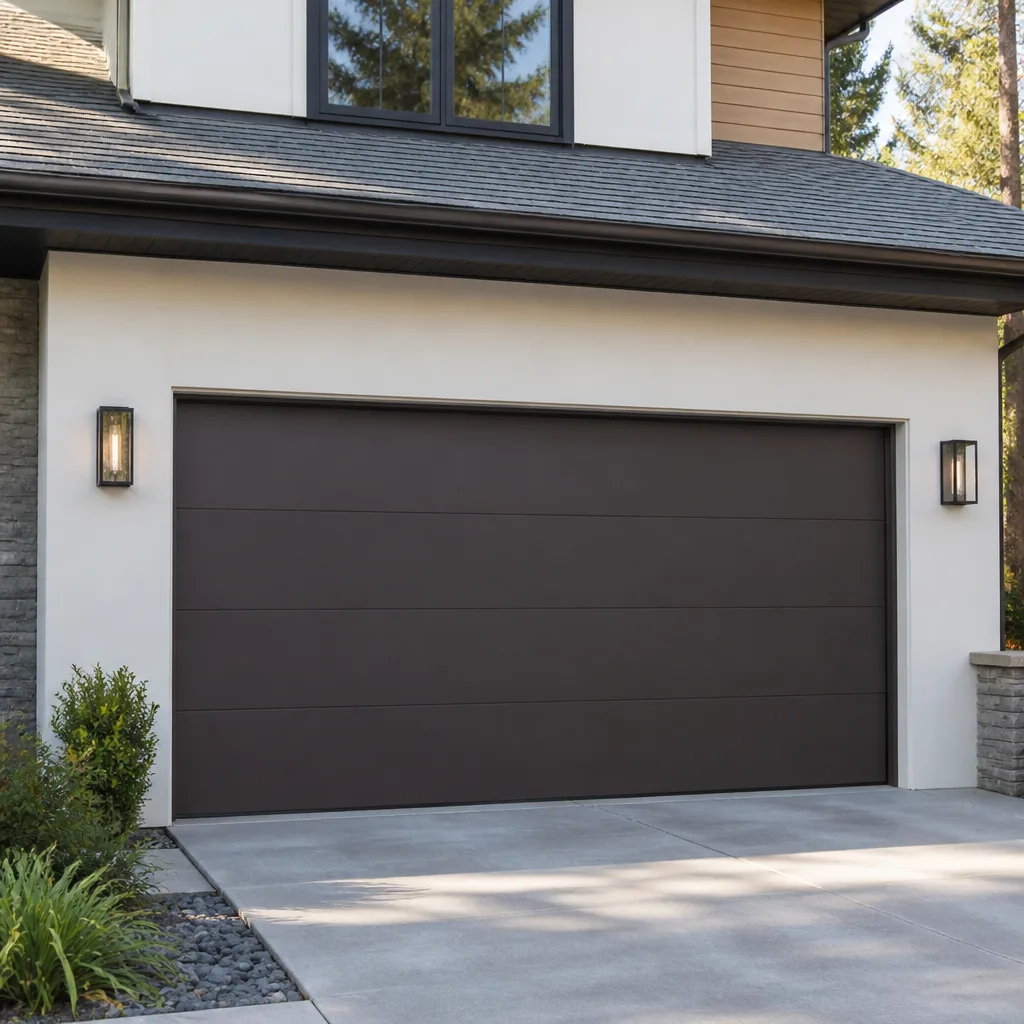 Modern flush
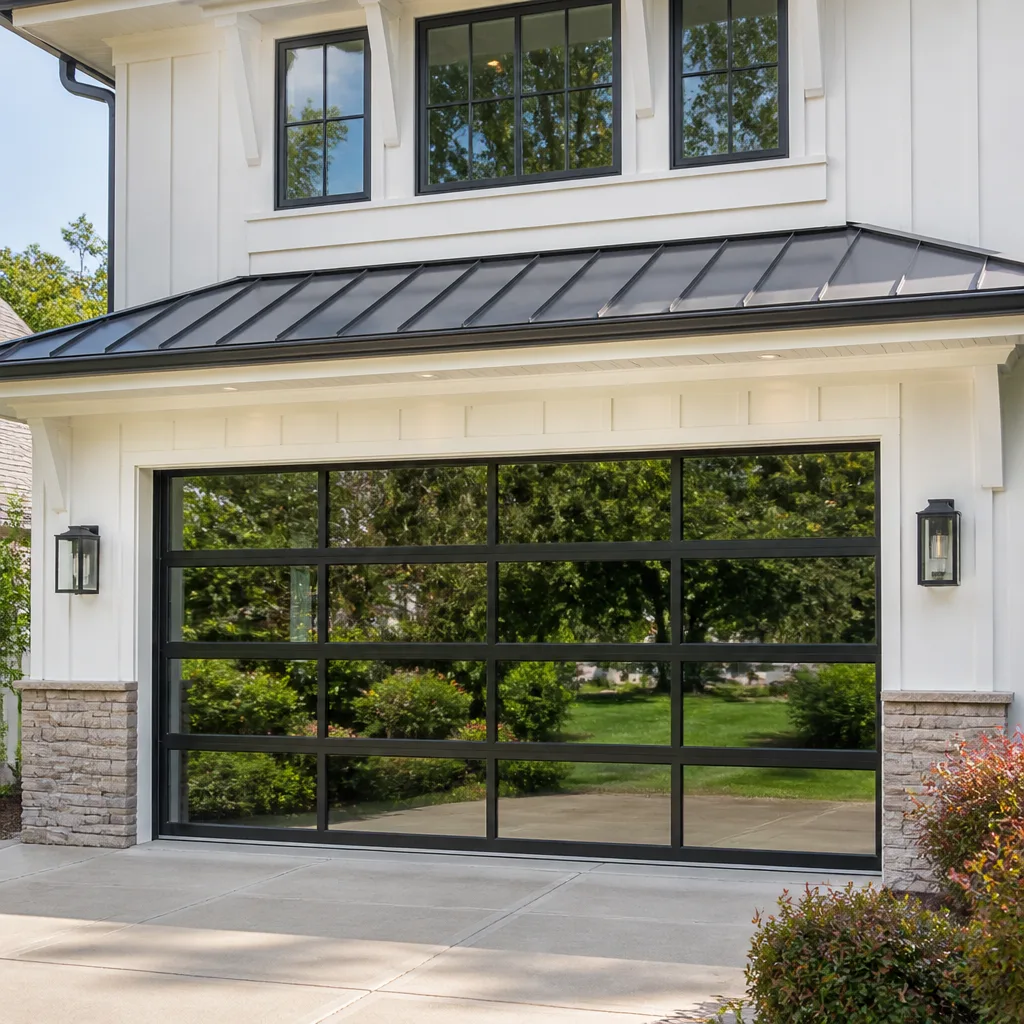 Full-view glass
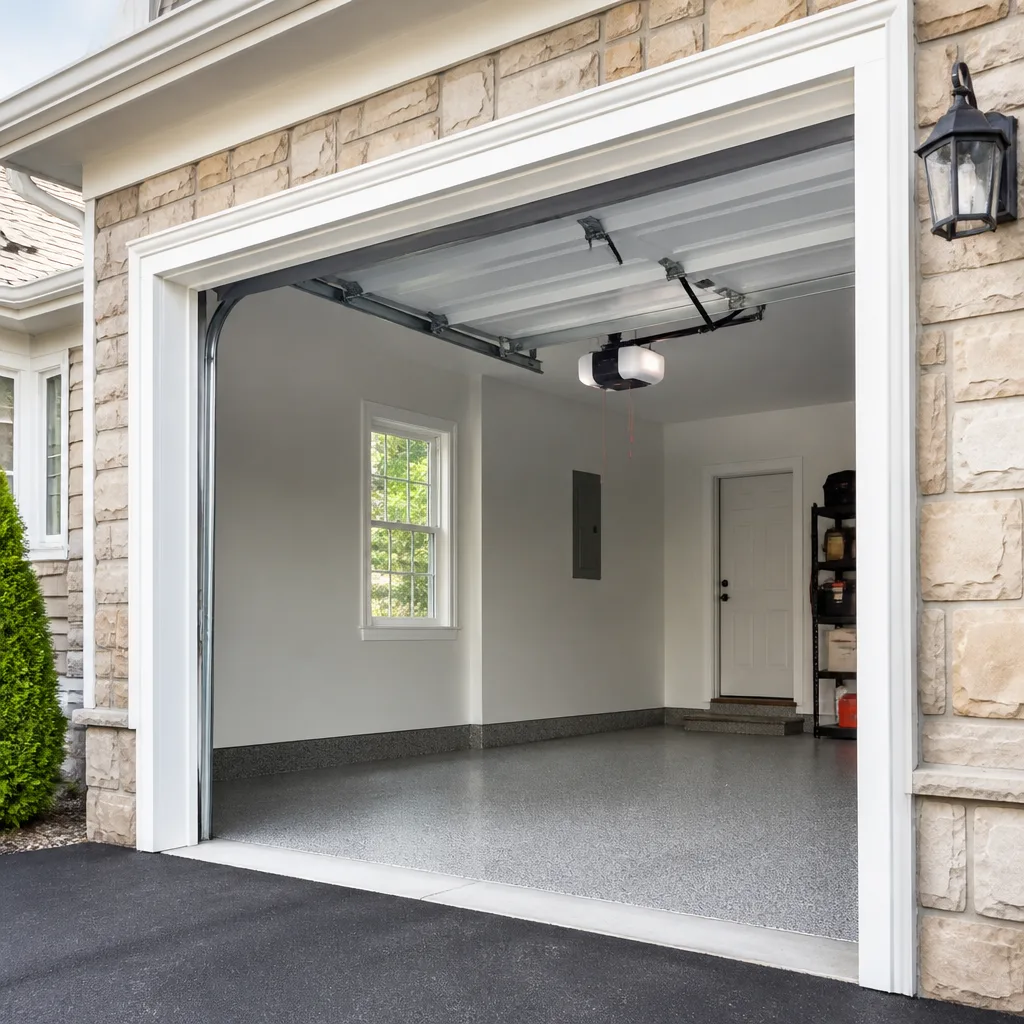 LiftMaster openers
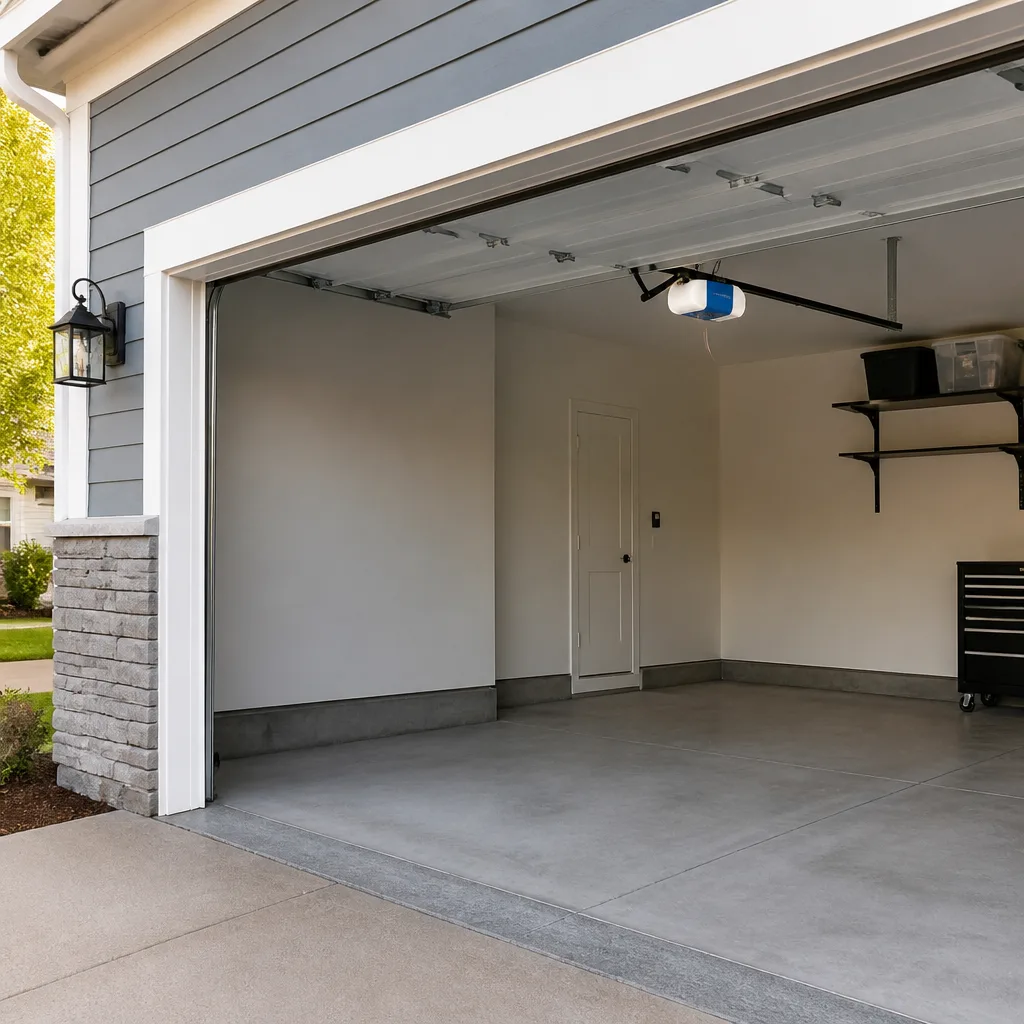 Chamberlain openers
Full 25-point door and opener safety check with every visit - springs, cables, rollers, tracks, and your LiftMaster or Chamberlain opener included
You get a price before we start. It does not change when the pro arrives.
Get your free estimateHow to Hire a Garage Door Contractor in Newton: A Step-by-Step Guide
A contractor who can’t name the specific spring type your door uses before seeing it isn’t diagnosing – they’re guessing, and you’re paying for the guess. Most homeowners in Newton hire a garage door contractor the same way they’d hire a painter: compare three quotes, pick the middle one, hope for the best. That works for repainting a hallway. It doesn’t work for a torsion spring under several hundred pounds of stored tension, an opener wired into your home’s electrical circuit, or a new door that has to meet Massachusetts rules before it leaves the driveway. This guide gives you the framework those other trades don’t require. You’ll learn the questions that separate a specialist from a generalist, how to read a quote line by line, and what local code actually expects from the job. Newton, this one’s written for you.
Quick Answer
To hire a garage door contractor in Newton, verify Massachusetts Home Improvement Contractor (HIC) registration first, then ask five technical questions about your specific door type, spring system, and opener brand before anyone quotes a price. Demand a written, itemized estimate produced after an on-site measurement, and reject any quote given over the phone without the contractor seeing the door. A specialist will diagnose before pricing; a generalist will price before diagnosing.
Styles & brands we work with
- Raised-panel steel
- Carriage house
- Modern flush
- Full-view glass
- LiftMaster openers
- Chamberlain openers
Table of Contents
- Why Garage Door Work Needs a Different Vetting Framework
- Massachusetts HIC Registration: The Legal Baseline
- The Five Technical Questions to Ask Before Scheduling
- Specialist Diagnosis vs. Handyman Guessing
- How to Read a Garage Door Quote Line by Line
- Red Flags Specific to Garage Door Work
- Newton Climate, Housing Stock, and Your Door
- Why Springs and Openers Demand a Trained Professional
Why Garage Door Work Needs a Different Vetting Framework
Garage door work isn’t carpentry with a vertical panel attached. It sits at the intersection of load-bearing hardware, electrical systems, and local building code, and each of those has its own failure mode. A painter’s worst outcome is peeling in two years. A garage door contractor’s worst outcome involves a spring that lets go, a door that comes off its track, or an opener pulling a door that was never balanced for it.
That changes how you assess the person you hire. With most trades, you’re evaluating finish quality and price. With a garage door, you’re evaluating diagnostic skill, safety discipline, and whether the contractor understands the whole system rather than one part of it. A door is a mechanical assembly: panels, hinges, rollers, tracks, cables, springs, and the opener that drives it. Weakness in one component stresses the others. The contractor who replaces a worn spring without checking cable condition, or installs an opener without verifying door balance, has solved the visible problem and planted the next one.
Newton’s housing stock adds a wrinkle. The city has a wide mix of older two- and three-car garages alongside newer construction, which means contractors encounter everything from heavy older wood doors to modern insulated steel panels and smart openers. A crew that only knows one manufacturer’s lineup will be learning on your door. In our work across Newton, we’ve found that the vetting questions below surface the difference quickly, before anyone is scheduled.
The framework has three layers: legal compliance (registration and insurance), technical competence (do they know your system), and commercial clarity (is the quote honest and itemized). Skip any layer and you’re exposed.
Massachusetts HIC Registration: The Legal Baseline
Massachusetts requires home improvement contractors to register with the state under the Home Improvement Contractor (HIC) program, and garage door work falls within its scope when it’s performed on a residential property. This isn’t a nice-to-have credential you weigh against price. It’s the legal floor for anyone contracting home improvement work in the state, and it exists so homeowners have a formal channel if a job goes wrong.
What this means for you as a Newton homeowner:
- Ask for the registration number before scheduling. Any legitimate contractor can provide it. An evasive answer is an answer.
- Confirm the registration matches the business name on your quote. A number that belongs to a different entity is a warning sign.
- Ask about general liability insurance. The contractor should be able to state that they carry it. If a door panel or a track is damaged during the job, or someone is injured on your property, insurance is what stands between you and the bill.
- Get the written contract. Massachusetts rules around home improvement contracts require specific written terms. A contractor who resists putting the scope and price in writing isn’t a shortcut worth taking.
The practical takeaway: HIC registration and liability coverage are what you check before you discuss springs, openers, or brands. If either is missing, nothing downstream matters. When we connect Newton homeowners with local professionals, the pro is licensed and insured as their state requires, and we expect the same verification from anyone you hire.
The Five Technical Questions to Ask Before Scheduling
These five questions reveal, in about four minutes on the phone, whether you’re talking to a specialist or someone reading from a script. A knowledgeable contractor answers them with specifics and follow-up questions. An evasive one deflects, generalizes, or rushes to a price.
- “What spring type does my door use?” A trained technician will ask you the door’s width, height, and approximate weight, then explain torsion versus extension springs and why the distinction matters. Torsion springs mount above the door on a shaft; extension springs run along the sides. The two require different tools, different safety procedures, and different parts. If they don’t ask you anything before answering, they’re guessing.
- “How do you check door balance and weight before recommending a spring?” Springs are rated by door weight, and a mismatched spring fails early or stresses the opener. A specialist explains that they measure and test balance rather than installing whatever spring is on the truck. A generalist says “we’ll match what’s there” without checking whether what’s there was ever right.
- “Which opener brands do you work on regularly?” Ask about specific makes: LiftMaster, Chamberlain, Genie, Craftsman. Multi-brand familiarity matters because openers differ in logic boards, safety sensor behavior, and remote pairing. A contractor who only knows one brand will either force-fit yours or refer you elsewhere.
- “How do you diagnose an intermittent problem?” A door that works most of the time is the hardest call. The answer should involve a sequence: checking sensors, testing travel limits, observing the door through a full cycle, inspecting the balance and cable tension. If the answer is “we’ll replace the opener,” hang up.
- “What’s your warranty, in writing, and what exactly does it cover?” Parts and labor often carry different terms. A real answer distinguishes them, states duration, and puts it in the estimate. “We stand behind our work” is not a warranty.
Notice that none of these questions is about price. That’s deliberate. Price without diagnosis is a number attached to an unknown. Once you know the contractor can actually identify the problem, the quote becomes meaningful.
Specialist Diagnosis vs. Handyman Guessing
The gap between a garage door specialist and a generalist handyman shows up most clearly when a problem is intermittent. A door that jams two mornings a week, or an opener that reverses occasionally, doesn’t fit neatly into a symptom-to-part lookup. It requires a diagnostic sequence, and how a contractor runs that sequence tells you what you’ve hired.
A specialist’s process typically looks like this:
- Observe the whole cycle. Watch the door travel up and down at least twice, listening for changes in motor strain, watching for track wobble, and noting where the motion hesitates.
- Test balance with the opener disengaged. A door that won’t hold mid-travel, or runs on its own, has a spring or balance problem regardless of what the opener is doing.
- Inspect the mechanical components under load. Springs, cables, rollers, hinges, and tracks are checked for wear and alignment, not just replaced because they look old.
- Check the electrical and safety side separately. Sensor alignment, wiring, force limits, and logic board behavior are evaluated as their own system, because an opener fault can mimic a mechanical one.
- Separate the cause from the symptom. A door that reverses is often a sensor issue, but sometimes it’s a binding track overloading the opener’s force limit. Replacing the opener in that case fixes nothing.
A handyman, by contrast, tends to match the visible symptom to the most common part. Door won’t open: replace the opener. That works often enough to seem right, right up until it doesn’t. The diagnostic process costs time and pays for itself in a correct repair the first visit rather than a second call for the same problem. For a fuller picture of how a proper repair call runs, see our page on garage door repair.
When the fault is in the operator rather than the door, the diagnostic approach shifts to brand-specific knowledge. This is why multi-brand familiarity matters: LiftMaster and Genie boards fault differently, and Craftsman units sold through different eras have their own quirks. A technician who has worked across these brands diagnoses faster and more accurately than one meeting your system for the first time.
How to Read a Garage Door Quote Line by Line
Most garage door complaints trace back to the quote, not the repair. The number looked reasonable, the work got done, and then the scope, the parts, or the labor line didn’t match what the homeowner assumed. The fix is to read the estimate as a document, not a total.
Here’s what should appear, and what you should question:
- Parts, itemized. Springs, cables, rollers, hinges, and opener components should each appear with a description and price, not lumped into “hardware.” A single parts line is where markup hides.
- Labor, defined. “Labor included” should mean something specific: the work scope it covers, and whether a second component discovered mid-job is priced separately. Ask what happens if the technician finds a worn cable during a spring replacement.
- Disposal. Old doors, panels, and springs have to go somewhere. Whether that’s included or additional should be stated.
- Door weight and spring rating. For a spring job, the estimate should reflect your door’s actual weight and the spring rated for it. A generic “spring replacement” line without a weight basis is a mismatch waiting to happen.
- Warranty terms, written out. Parts and labor, in plain language, with durations.
- Permit responsibility, if applicable. For full door replacement, ask who handles any required permits. Most cities require a permit for structural or installation work of this kind, so confirm by asking Newton’s building department what applies to your job.
Price is per job and set by the written estimate. You should be quoted and agree to a price before any work starts. If the technician’s on-site assessment changes the scope, you get a revised estimate and approve it before the work proceeds. That’s the standard, and any contractor who resists it is telling you something.
On new installation, the process is deliberately slower than repair. A proper installation quote follows an on-site measurement of the opening, confirmation of headroom and side clearance, and a discussion of door style, insulation, and opener choice. You’ll get a written price after that visit, not a number over the phone. For more on that path, look at our garage door spring repair page alongside your installation questions, since the two often come up in the same conversation.
Red Flags Specific to Garage Door Work
General contracting red flags apply here too, but garage doors have their own set. These are the ones that matter most when you’re comparing contractors in Newton.
- Quoting without measuring. A phone quote for a new door, or even a spring replacement, before anyone has seen the door, is a guess. Door weight, opening dimensions, and headroom determine the parts. A contractor who quotes blind will either revise upward or install the wrong size.
- Recommending spring replacement without asking about door weight. Springs are rated to door weight. If the conversation never touches weight, you’re about to get a part chosen by convenience rather than specification.
- Vague warranty language. “Guaranteed” with no duration, no parts/labor split, and nothing in writing is not a warranty. Ask for specifics and expect them in the estimate.
- One-brand-only knowledge presented as expertise. A contractor who insists your Clopay, Amarr, or Wayne Dalton door needs replacing because “we don’t work on those” is steering you to what they sell, not what you need.
- Pushing a full replacement for a repair-sized problem. A worn spring, a misaligned track, or a faulty sensor is a repair. A contractor who jumps to replacement before diagnosing has a sales process, not a diagnostic one.
- No written estimate before work begins. In Massachusetts, a written contract isn’t optional courtesy; it’s the legal standard for home improvement work. If it isn’t offered, ask, and walk if it isn’t produced.
- Reluctance to name the brand of the parts they’ll install. You should know whether the spring, opener, or panel is a named brand or a generic. Brand matters for warranty and for future serviceability.
None of these requires technical knowledge to spot. They’re pattern signals, and a contractor who trips two or three of them is telling you how the job will go.
Newton Climate, Housing Stock, and Your Door
Newton’s freeze-thaw cycle is the quiet engine behind a lot of garage door wear. Winters here swing between deep cold and thaw, sometimes within days, and that expansion and contraction works on metal components over years. Springs under constant tension are sensitive to temperature swings. Track alignment shifts as the structure around the opening moves. Seals and weatherstripping crack and stop sealing, which lets cold air and moisture in and stresses the door’s balance as ice builds up along the bottom edge.
This matters for hiring because a contractor who works in Newton should be factoring local conditions into their recommendations. Questions worth asking:
- Does my door need an insulated panel or a weather seal upgrade? In a Newton winter, an unsealed door is a cold-air leak into the house, and it puts strain on the opener through ice weight.
- Should the spring rating account for seasonal temperature extremes? It should. Springs are rated to load, and temperature affects how they perform over their service life.
- Was the door balanced for the current season and weight? A door that’s fine in July can bind in January. Balance testing should account for that.
On housing stock, Newton has a long history of older garages attached to homes from many eras, alongside newer construction. That means you’ll find everything from single-panel wood doors to modern insulated steel and multi-panel Clopay and Amarr designs in the same neighborhood. A contractor who’s only installed one brand on new construction will be less comfortable diagnosing a twenty-year-old Wayne Dalton or an older Craftsman opener. Ask what they’ve actually worked on in the area before committing. For our part, we work on your brand, whether that’s the door you inherited with the house or the opener you installed last year.
Tree debris is another Newton-specific factor. Foliage and small branches collecting on tracks, and grit in rollers, are common causes of binding that gets misdiagnosed as an opener failure. A contractor who checks the simple mechanical causes first saves you a needless replacement.
Why Springs and Openers Demand a Trained Professional
Two components in a garage door system carry genuine danger: the springs and the electrical side of the opener. Both are reasons to hire a trained professional rather than attempt the work as a homeowner, and both should shape how you evaluate a contractor’s credentials.
Springs. Torsion springs hold a large amount of stored mechanical energy, and that energy doesn’t announce itself. A spring that’s under tension can cause serious injury if handled incorrectly, and the adjustments a technician makes involve tools and procedures designed around that risk. What you should evaluate in a contractor is whether they perform spring work in-house as a core service or refer it out. A contractor who refers springs to someone else is telling you they don’t consider spring work part of their capability. We handle spring repair as a core service with trained technicians precisely because it’s the repair that most demands specialization.
Openers and electrical. Opener installation and repair involve low-voltage control wiring and, on some units, a connection to a circuit. Wiring errors can create shock and fire risk. This isn’t a job to improvise, and a contractor should be comfortable working on the electrical as well as the mechanical side of the opener rather than stopping at the door hardware. Our garage door opener repair page covers the electrical and sensor side in more detail.
The safety rule for homeowners. If a spring is broken, don’t run the door and don’t try to lift it manually. If the opener is behaving erratically or you smell burning from the control board, disconnect it from the door and call for service. Being able to spot these conditions is useful. Treating them as fixable from a ladder is not.
When you hire, ask the contractor directly: “Do you perform spring replacement in-house, and are your technicians trained on torsion systems?” The answer tells you whether they have the capability or are brokering the job.
Common Mistakes to Avoid
- Hiring on price alone without a diagnostic. The lowest quote for an unknown problem isn’t a bargain, it’s a bet. Get a diagnosis first, then compare quotes for the same scope.
- Skipping HIC verification. Newton homeowners sometimes treat registration as paperwork to check later. It’s the first thing to check, because it’s the legal foundation for everything else.
- Accepting a phone quote for a new door. Installation requires measurement and a written estimate after the site visit. A phone number is an estimate-shaped guess.
- Letting the contractor pick the brand for you. If a quote pushes one manufacturer without discussing what’s already on your door, ask why. You should get the door you need, not the door that’s easiest to source.
- Ignoring the opener when repairing the door. Replacing panels or springs without checking the opener’s force settings and balance leaves a mismatch. The systems are connected.
- Assuming “labor included” covers everything. The scope of labor should be specified. Ask what’s covered and what triggers an additional charge, and get it in writing before work starts.
- Not asking about warranty terms in writing. A verbal warranty is a verbal warranty. Get duration, parts vs. labor, and coverage exclusions into the estimate document.
See the difference
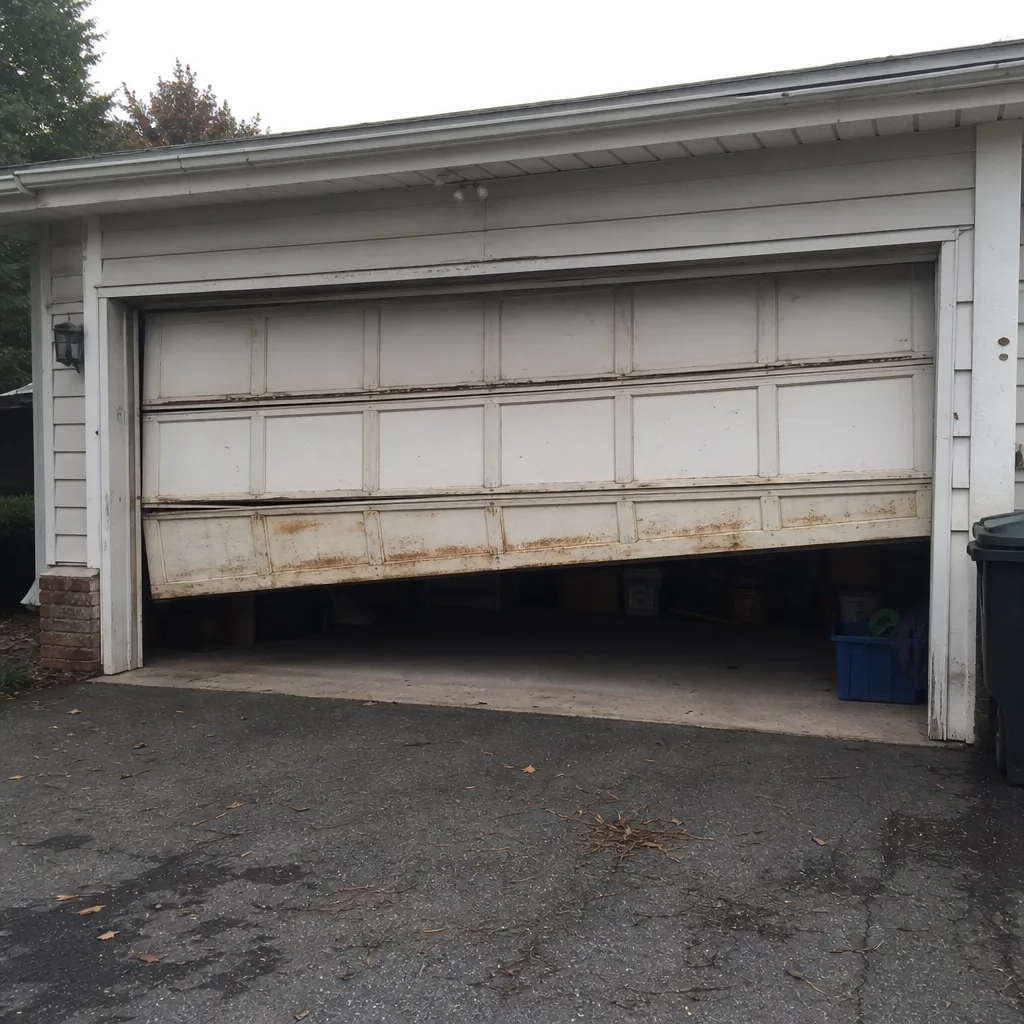 Before
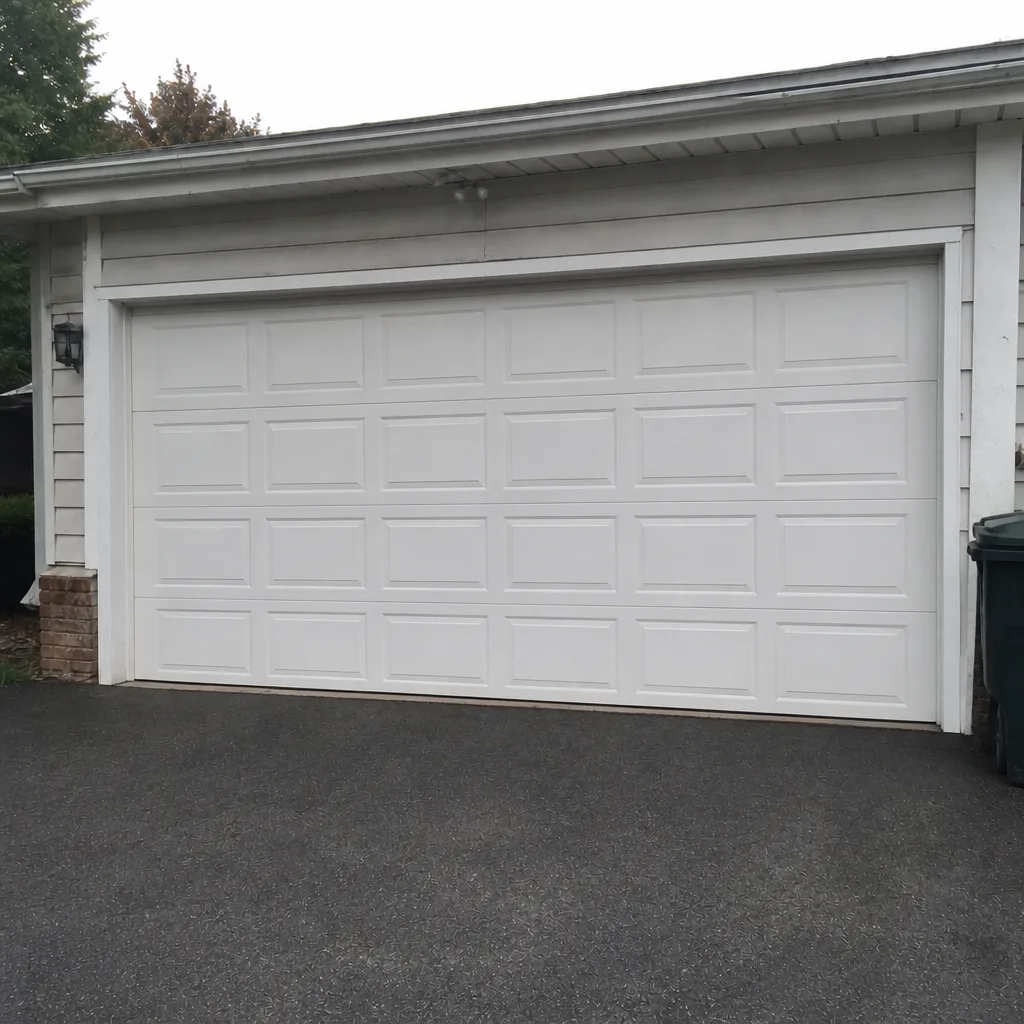 After
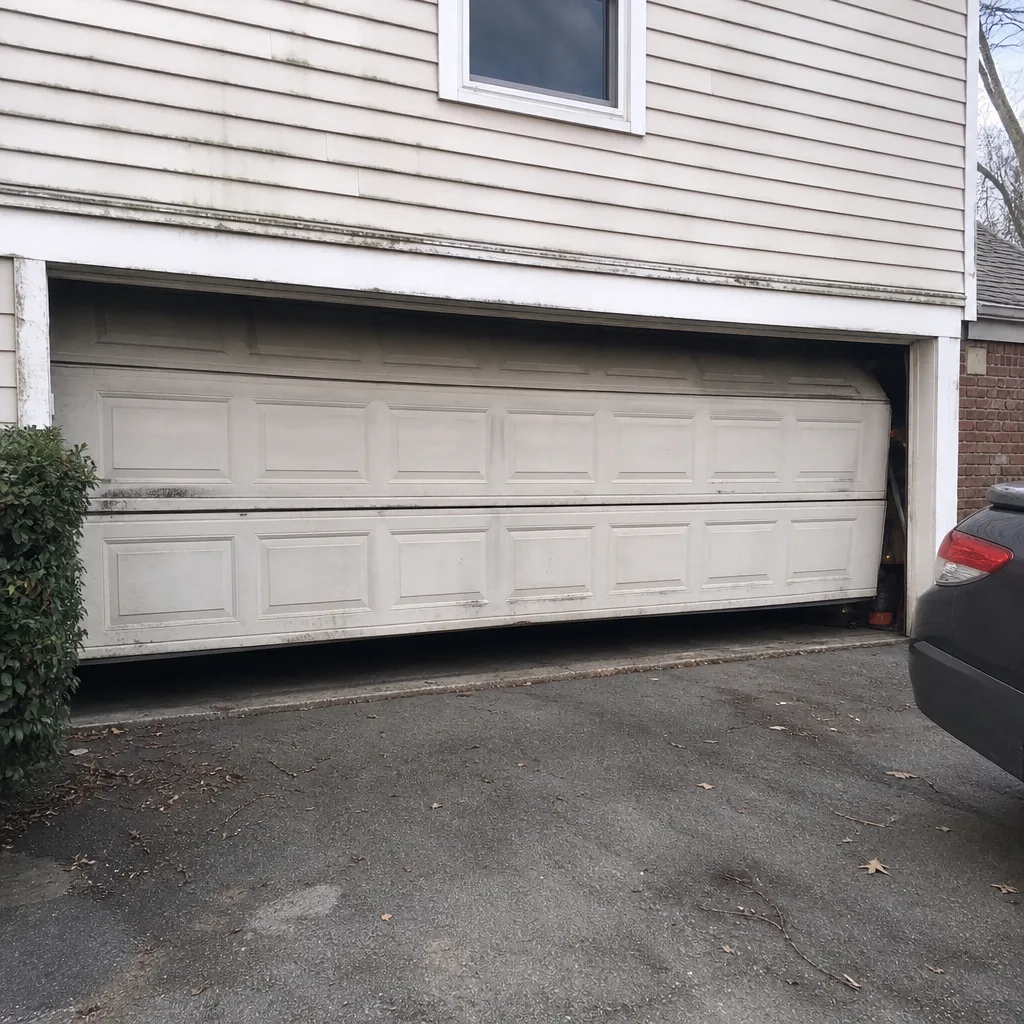 Before
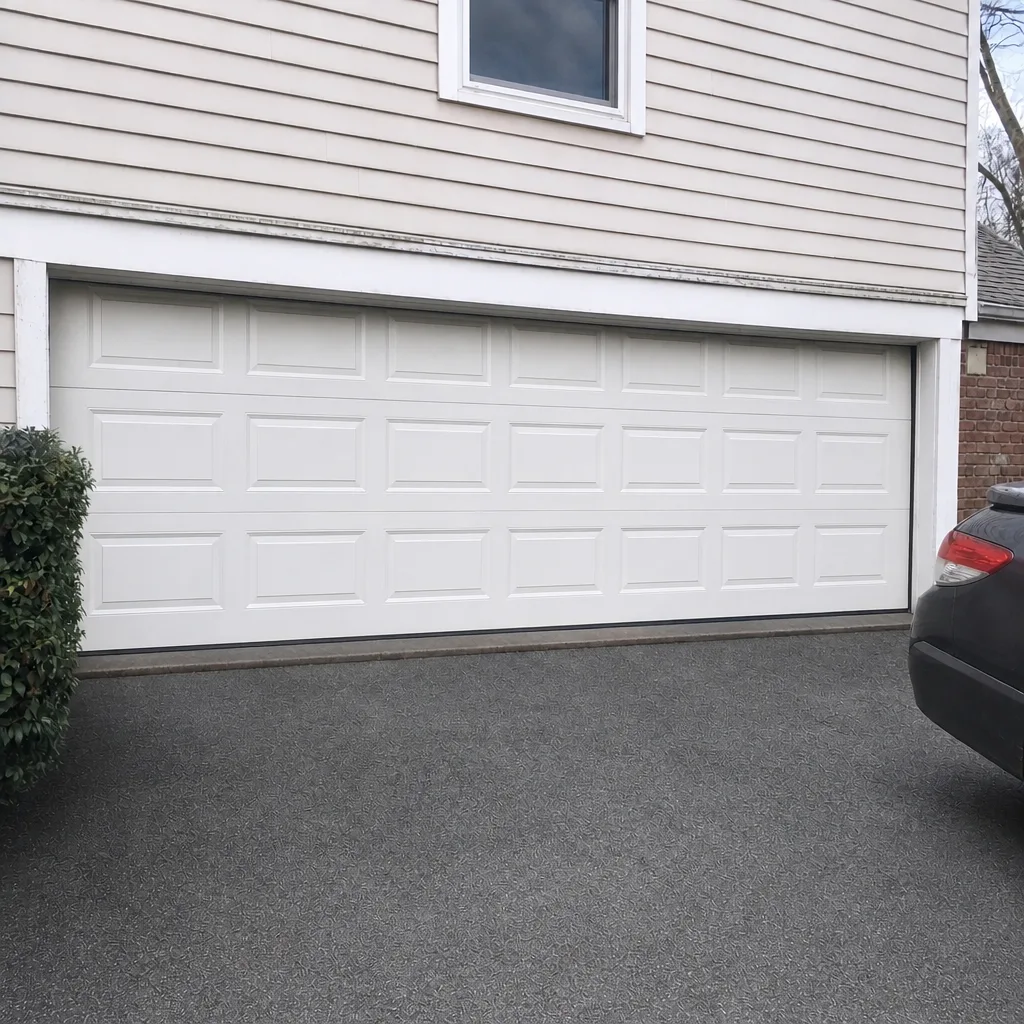 After
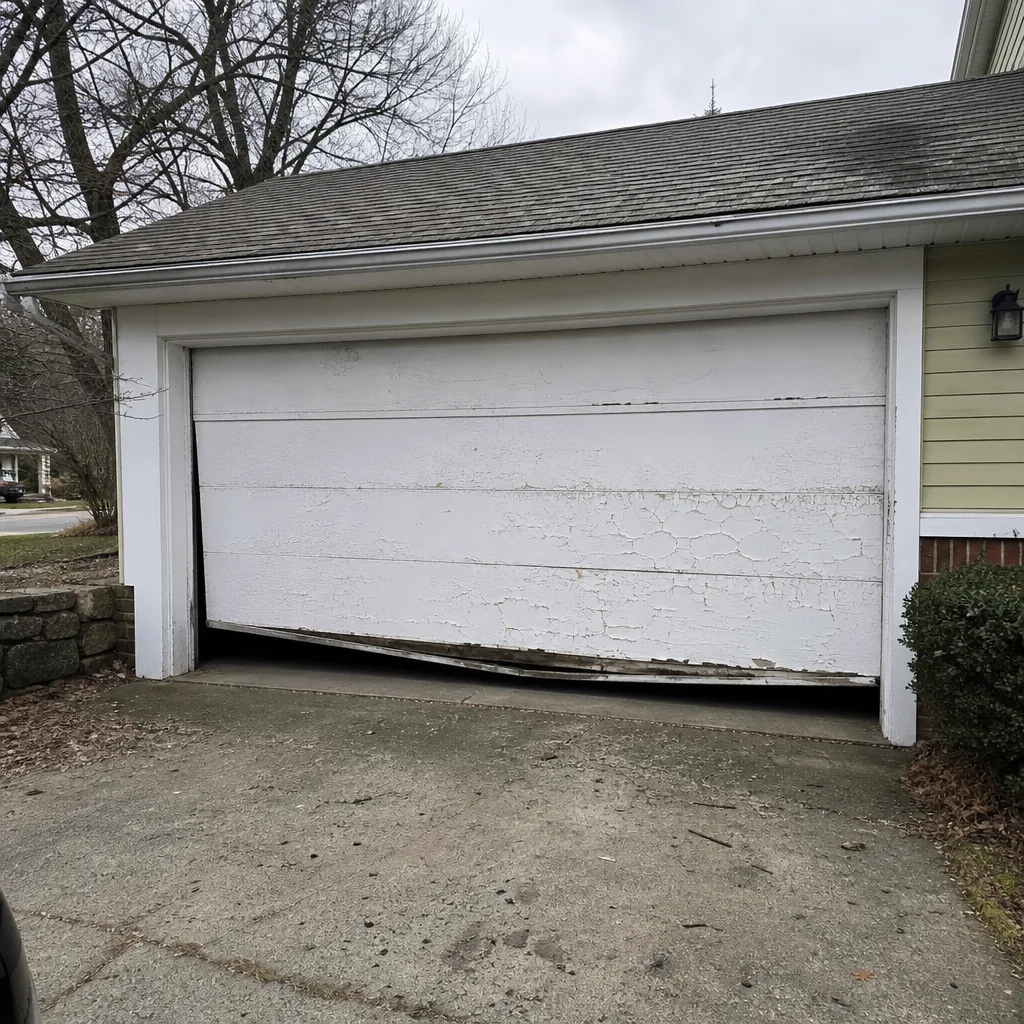 Before
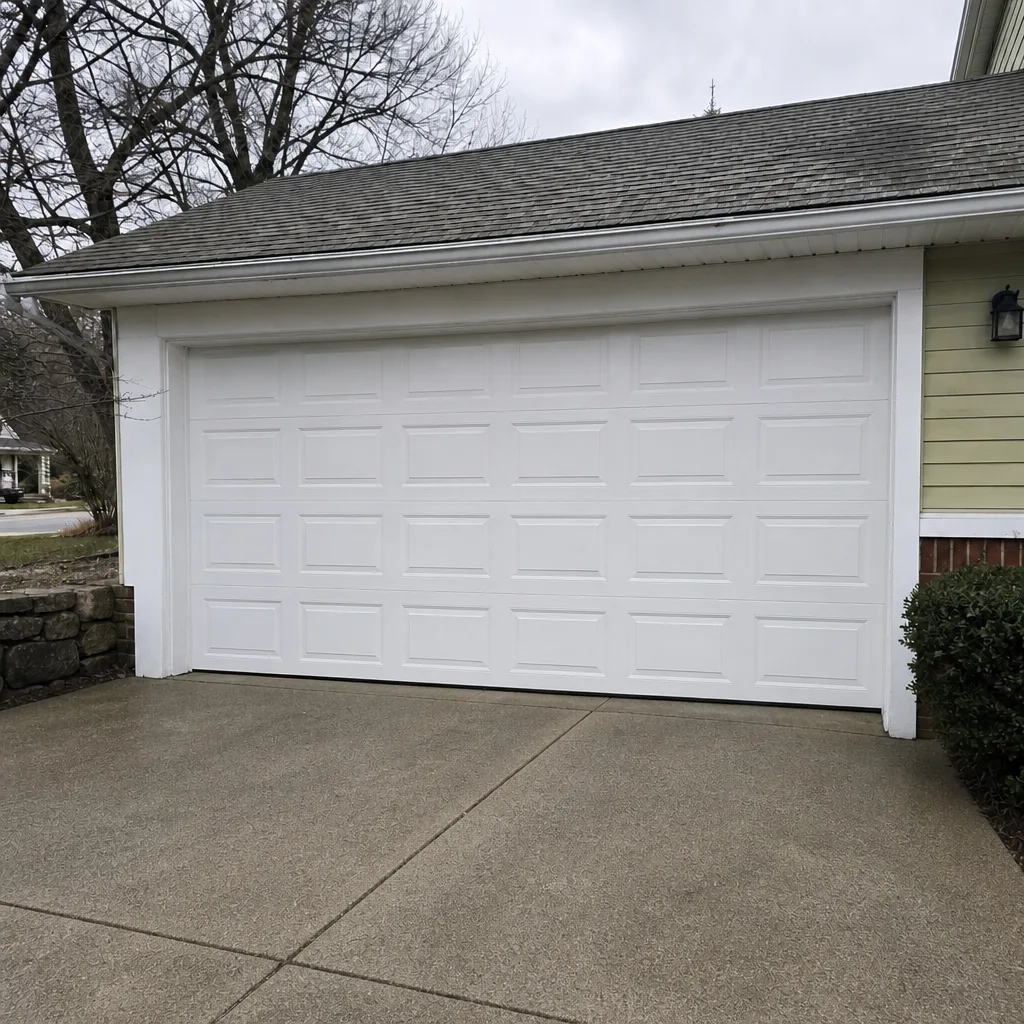 After
When to Call a Professional
Some jobs are clearly a call: a broken spring, a door off its track, an opener that won’t respond, a cable that’s frayed or snapped, a door that won’t stay balanced. Those aren’t judgment calls. If a spring has failed, the door should not be operated at all until it’s repaired, and the work involves stored mechanical energy that demands a trained technician. The same goes for the electrical side: if you smell burning from the opener or see exposed wiring, disconnect it and call.
Then there’s the intermittent category: a door that reverses occasionally, an opener that responds slowly, a track that has started to shift. Those are the calls where diagnostic skill matters most, because the wrong fix costs more than the right one. Either way, an on-site assessment beats a phone diagnosis every time.
Newton Garage Door Repair Co offers free estimates in Newton – call (877) 362-5143. We answer 24/7. Fast dispatch from 7am to 7pm, Sunday through Friday. Our technicians have up to 10 years of experience, work on eight major garage door brands including LiftMaster, Chamberlain, Genie, Clopay, Amarr, Wayne Dalton, Craftsman, and Raynor, and handle the full system from the panels and springs to the opener. When you work with us, the same team that diagnoses your door is the one that repairs or replaces it, so there’s no handoff and no second call to a second company.
For a full view of what we cover, start with Newton Garage Door Repair Co. Repair and emergency work is scheduled as fast as possible, while installation is measured, ordered, and scheduled around the door you choose. Every job gets a written price before work begins.
Frequently Asked Questions
Yes. Massachusetts requires home improvement contractors to register with the state under the Home Improvement Contractor program, and garage door work on a residential property falls within its scope. Ask for the registration number before scheduling, confirm it matches the business name on your quote, and ask about general liability insurance. If either is missing, don’t proceed.
A contractor who is diagnosing asks you questions before giving an answer. Expect them to ask about your door’s width, height, approximate weight, and the symptoms in detail. They’ll want to observe the door through a full cycle, test balance with the opener disengaged, and check the mechanical and electrical systems separately. If they name a fix before asking anything, that’s a guess.
Brand matters because mechanical and electronic systems differ in their parts, ratings, and failure patterns. A technician familiar with Clopay, Amarr, Wayne Dalton, and Raynor doors, or with LiftMaster, Chamberlain, Genie, and Craftsman openers, diagnoses faster and more accurately than one encountering your system for the first time. Ask which brands the contractor works on regularly, and whether they service the door you already have rather than steering you to one they sell.
Not for installation, and not for a spring or major repair. A phone quote is given before the contractor has measured the opening or verified door weight, and those numbers determine the parts. A written estimate after an on-site visit is the standard. If a contractor pushes a number before seeing the door, ask them to come measure and quote in writing instead.
A proper quote itemizes parts by description, labor scope, disposal, and warranty terms. For a spring job, it should reflect your door’s actual weight and the spring rating chosen for it. It should state that the price is agreed before work begins, and what happens if additional wear is found mid-job. Door replacement quotes should also clarify who handles any required permits.
Yes. Emergency garage door service is a standard offering, not a special case. If a spring snaps or a door comes off its track, call (877) 362-5143. We answer 24/7. Fast dispatch from 7am to 7pm, Sunday through Friday. A call outside dispatch hours is booked into the next opening. The price is set by the written estimate, so there’s no surprise fee layered on for urgency.
No. Springs store a large amount of mechanical energy under tension, and incorrect handling can cause serious injury. If a spring is broken, don’t run the door and don’t try to lift it by hand. Call a trained professional who performs spring work as a core service. That’s the case whether the spring is a torsion or extension type.
The Bottom Line
Hiring a garage door contractor in Newton comes down to three layers. Verify the legal baseline: HIC registration and liability insurance. Test technical competence with the five questions, and pay attention to whether the answers are specific or vague. Demand commercial clarity in a written, itemized estimate produced after a real diagnosis, with warranty terms spelled out.
Then apply the filter that matters most: does this contractor diagnose before pricing, or price before diagnosing? The answer tells you whether you’re hiring a specialist who will get it right the first visit or a generalist who’ll solve the visible problem and leave the next one in place. Springs, openers, and installations all demand the former. When the problem is intermittent, that difference is the whole ballgame.
Call (877) 362-5143 for a free estimate. We answer 24/7. Fast dispatch from 7am to 7pm, Sunday through Friday. The price is quoted and agreed before any work starts, and the team that diagnoses your door is the team that fixes it.
Written by the team at Newton Garage Door Repair Co.